Pico Toning Laser Treatment for Pigmentation (10 vs. 20 Sessions) – Hev Dermatology in Korea
This post was written in accordance with the Medical Service Act and was created by a medical institution operated by a board-certified dermatologist at Hev Clinic, with the consent of the patient who received treatment.
It is not intended to emphasize treatment effects or personal treatment experiences, but rather to provide general information about dermatology and aesthetic procedures.
The photos used in this post meet the following conditions:
- The same individual appears in both the before and after photos.
- The dates when the photos were taken before and after treatment are specified.
- The photos were taken under the same conditions.
This post provides various medical information, including possible side effects that may occur from the procedure. In accordance with Article 56, Paragraph 2, Subparagraph 7 of the Medical Service Act, diagnoses and treatment results may vary depending on the individual, and both effects and side effects may differ from person to person.
※ This article was written directly by the director of Hev Clinic for the purpose of providing information about dermatologic and aesthetic procedures.
First-Time Pigmentation Treatment Case Study (Case 116)
Today I’m sharing the story of a patient who visited our clinic for her very first dermatology procedure—and what we learned along the way.
Case 116: Woman in her early 40s.
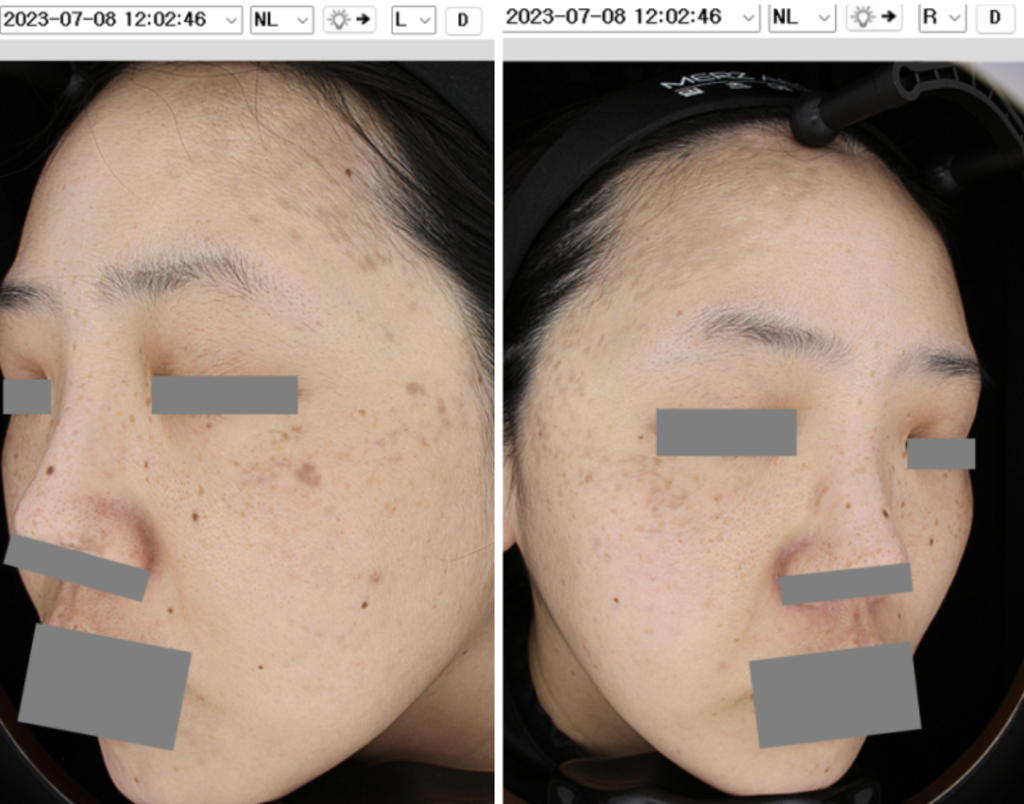
Her Main Concern: Long-Standing Facial Pigmentation
She came in for dark pigmentation on her face that had been present since after puberty.
Like many people, she assumed it might be melasma, freckles, or lentigines.
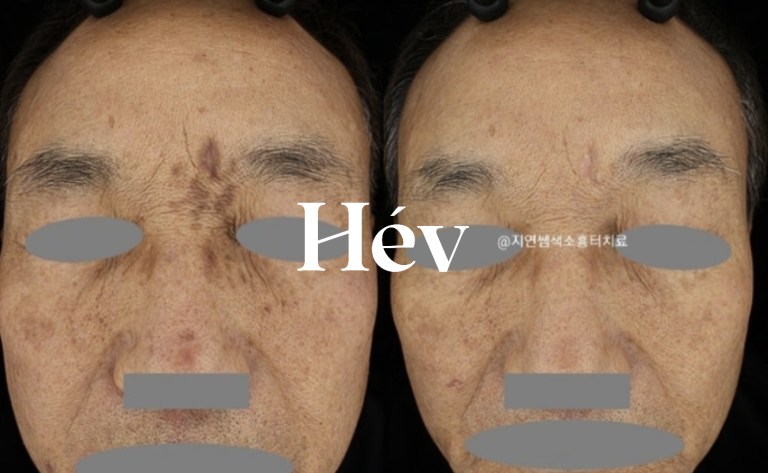
On exam, we saw symmetrical dark pigmentation on both sides of the forehead, hairline, temples, cheekbones, front cheeks, and the tip of the nose.
Based on the overall pattern, we discussed the possibility of acquired bilateral nevus of Ota.
Why Nevus & Stubborn Pigmentation Treatments Require a Long-Term Plan
Whenever I see cases like nevus of Ota or certain types of lentigines, my first thought is always the same:
These treatments can take a long time. How can I help the patient feel safe, informed, and confident—and show them that we can get results as efficiently (and gently) as possible?
To be honest, from a patient’s perspective, committing to a plan that may take 20, 30, or even up to 50 sessions—without knowing exactly when the “big change” will show—is really difficult.
Key takeaway: For specialized pigmentation conditions (especially nevus-related pigmentation), it’s best to choose a clinic with extensive experience treating nevus. Technique, device selection, settings, and aftercare all matter—especially over many sessions.
Results After 20 Sessions (Before & After)
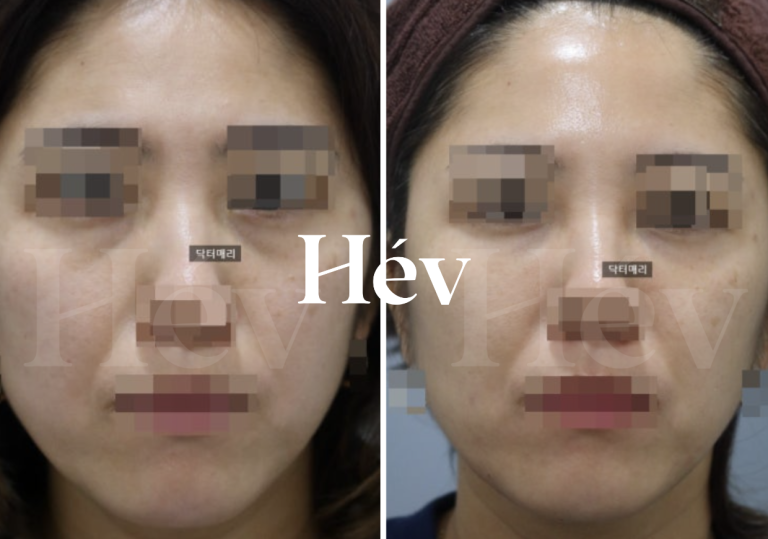
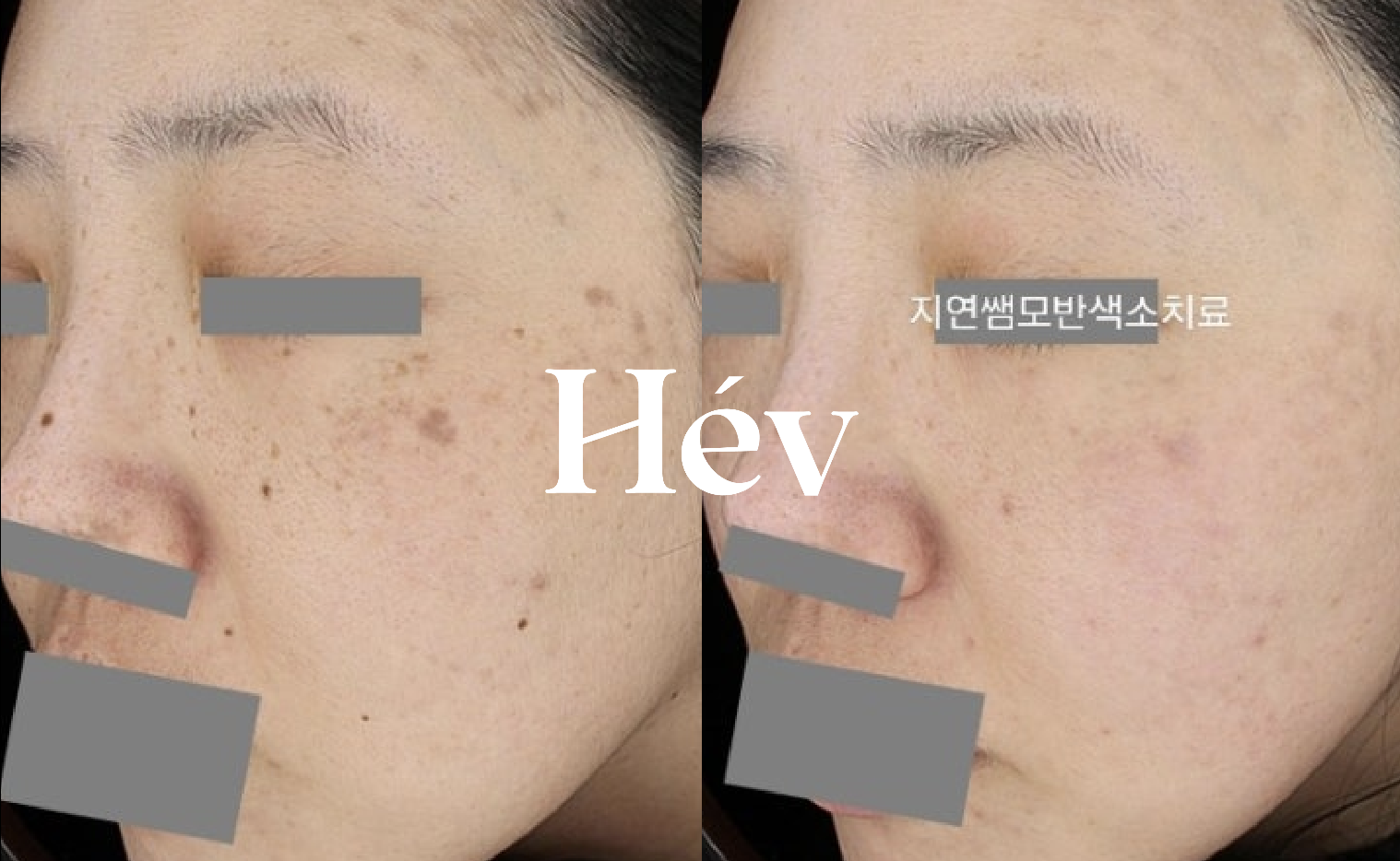
Customized pigmentation treatment for nevus – 20 sessions
Before procedure vs. After procedure
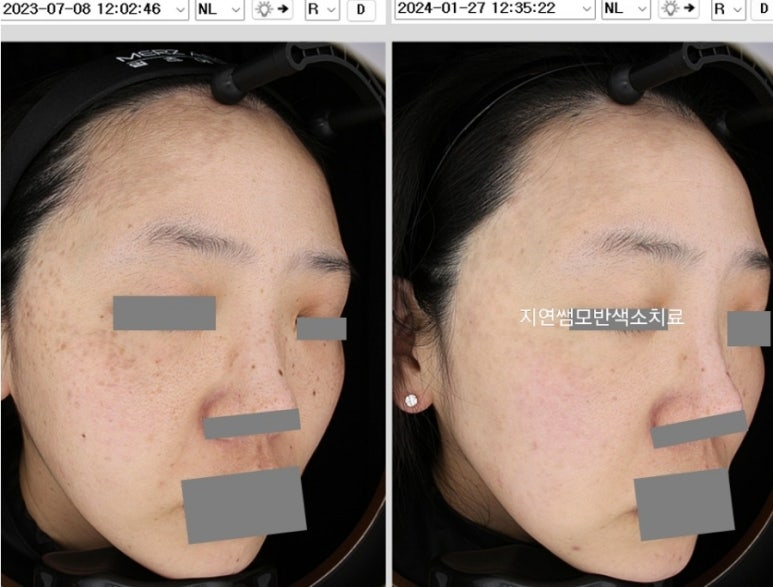
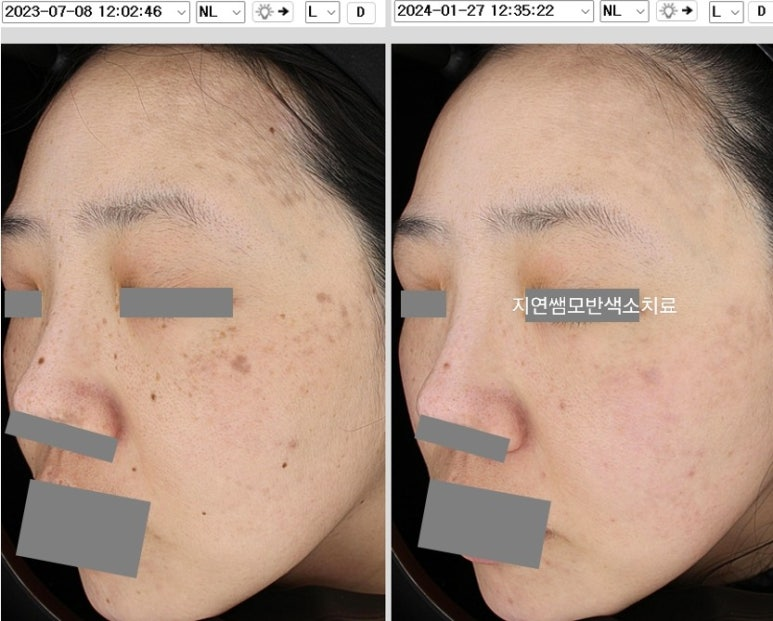
Before: July 8, 2023 → After: January 27, 2024
These photos are shared with the patient’s consent. They are original images of the same person, taken in the same location, with no editing.
Important: Results can vary from person to person. A thorough consultation is essential, including a discussion of potential side effects such as post-inflammatory hyperpigmentation (PIH), bruising, or swelling.
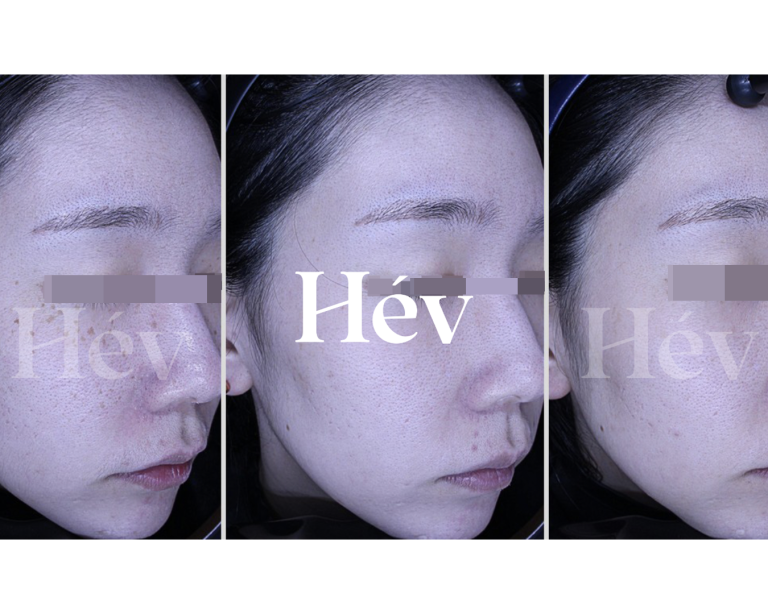
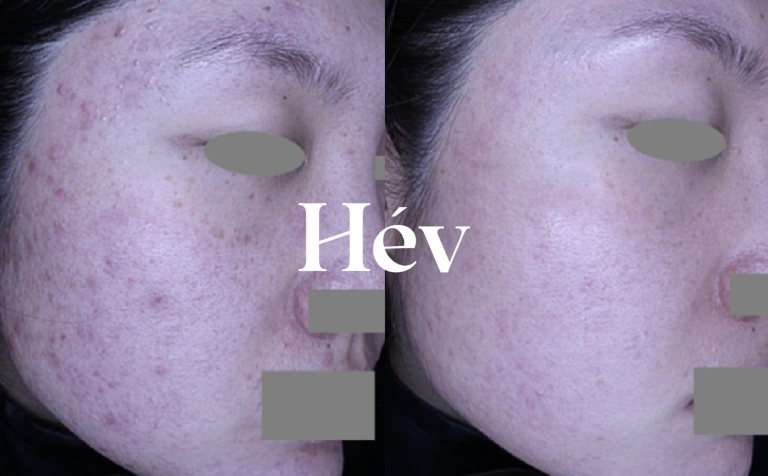
What It Looked Like in Real Life
Customized pigmentation treatment for nevus — after 20 sessions.
And here’s what it looked like in everyday lighting (not just in standardized photos):
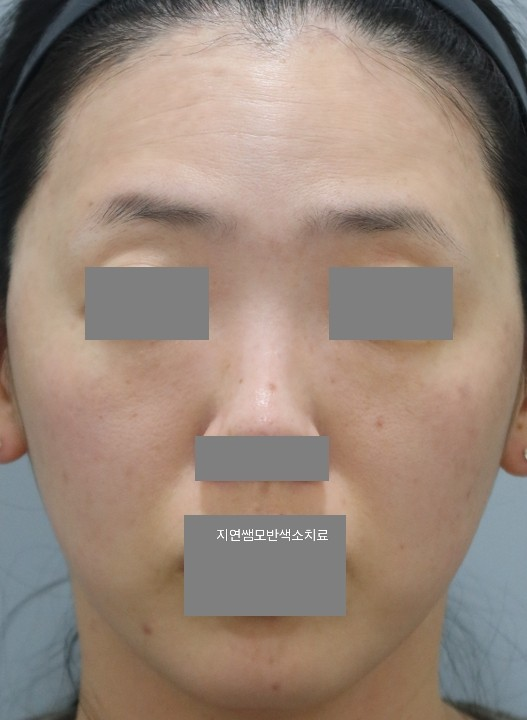
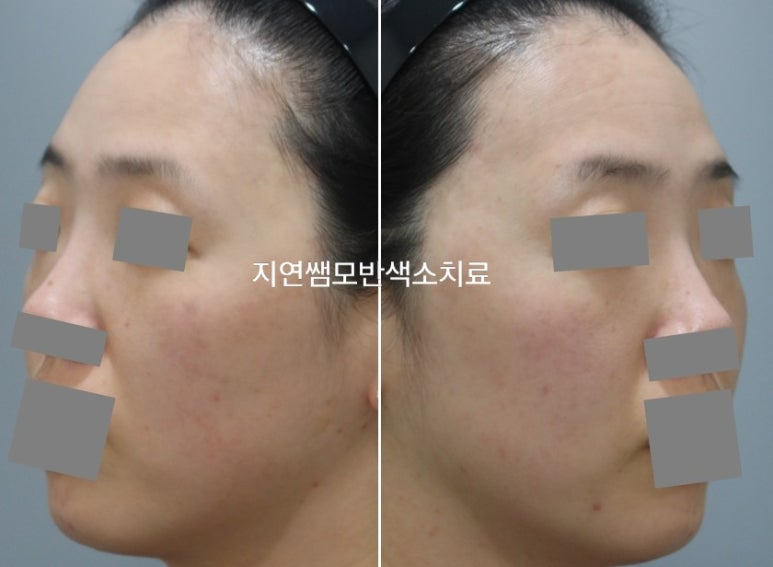
Visually, it’s now barely noticeable.
Why We Took a More Cautious Approach
One important detail: although it isn’t very obvious in photos, this patient’s skin around the face, eyes, and neck tends to become red and dry easily, and she also had a history of eczema. Because of that, we performed her laser sessions very carefully and adjusted settings conservatively.
This was also a case with a higher risk of post-inflammatory hyperpigmentation (PIH), so we prioritized skin-barrier care and steady progress rather than rushing.
Maintenance Plan (Preventing Recurrence)
Recently, to help maintain her results and reduce the chance of recurrence, she began an additional maintenance course: 10 more sessions (bringing her to her 30th session overall), scheduled once a month for a year.
Even so, this was a type of nevus that responded relatively well to treatment.
With pigmentation treatments, we always give our best in every case—but if a certain pigmentation type is known to respond slowly or typically requires a long treatment course, I make sure to explain that clearly from the start.
In that sense, she was truly fortunate—and I’m grateful I could be part of her journey.
Thank you.