Laser treatment for melasma and pigmentation to achieve clear, radiant skin for brides-to-be –
This post was written in accordance with the Medical Service Act and was created by a medical institution operated by a board-certified dermatologist at Hev Clinic, with the consent of the patient who received treatment.
It is not intended to emphasize treatment effects or personal treatment experiences, but rather to provide general information about dermatology and aesthetic procedures.
The photos used in this post meet the following conditions:
- The same individual appears in both the before and after photos.
- The dates when the photos were taken before and after treatment are specified.
- The photos were taken under the same conditions.
This post provides various medical information, including possible side effects that may occur from the procedure. In accordance with Article 56, Paragraph 2, Subparagraph 7 of the Medical Service Act, diagnoses and treatment results may vary depending on the individual, and both effects and side effects may differ from person to person.
※ This article was written directly by the director of Hev Clinic for the purpose of providing information about dermatologic and aesthetic procedures.
This post is for brides-to-be—and also for anyone else—who may not have any special events coming up but are concerned about pigmentation and blemishes.
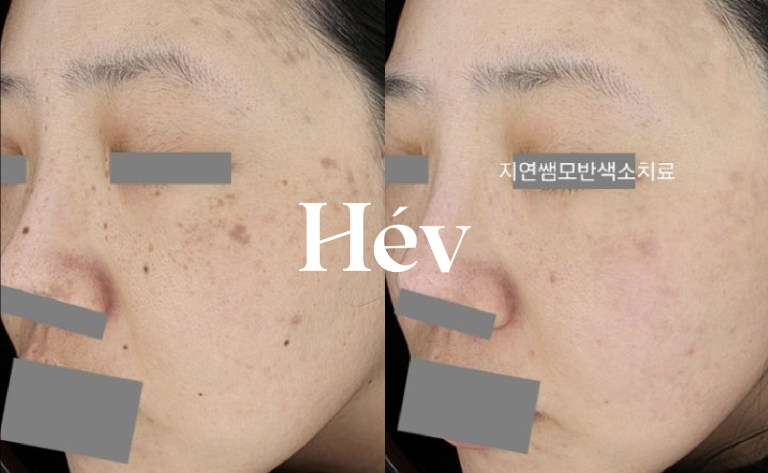
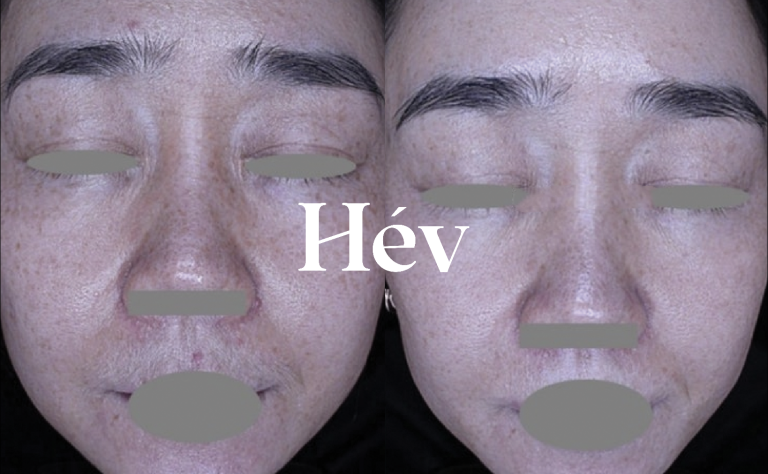
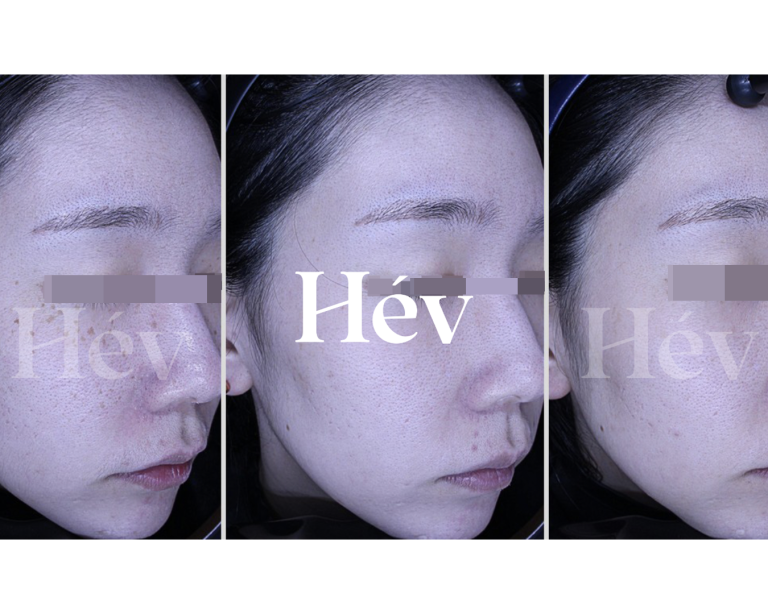
Before the procedure: 2024.09.10 – After the procedure: 2024.12.03
This photo was posted with consent and is an unedited, original photo of the same person taken in the same location.
The results of each procedure may vary, so please have a thorough consultation beforehand regarding possible side effects (such as pigmentation, bruising, or swelling).
1. Clinic visit
A bride-to-be visited the clinic feeling that her facial tone looked dull due to blemishes and melasma, and that her skin lacked a bright, radiant appearance.
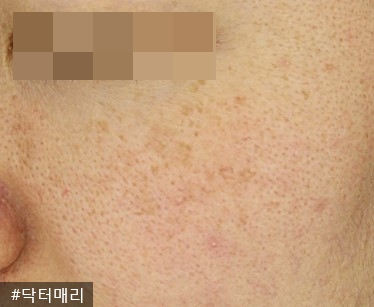
Unfortunately, these types of blemishes are difficult to remove with melasma or spot-correcting creams and cosmetic products alone.
2. Visual assessment
In addition to melasma and pigmentation, the face often shows a variety of skin conditions such as moles, flat warts, milia, sebaceous hyperplasia, and seborrheic keratoses.
Therefore, we carefully check what types of lesions are present and how extensively they are distributed on your face.
(This step is very important.)
This is because each condition requires a different treatment approach, treatment course, and response.
3. Mark-Vu assessment
Before treating pigmentation and blemishes, we objectively document the skin’s condition using imaging.
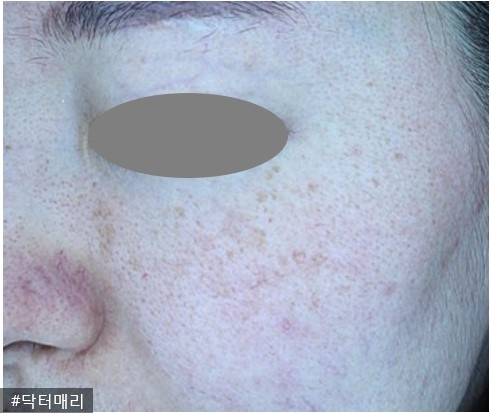
We also take the time to check what the areas that looked suspicious to the naked eye actually look like, and whether there is anything more hidden beneath the surface.
4. Final assessment
Through a visual examination and Mark-Vu imaging, we review the condition of the skin together. I then explain the treatment plan and direction I intend to take, as well as the expected number of treatment sessions—along with the reasoning behind them.
Since I’m not a god, there are naturally cases where the treatment response appears more slowly than initially expected. However, based on my experience observing responses to pigment laser treatments, I proceed with the procedure while explaining the plan using predicted responses and outcomes in about 90–95% of cases.
5. Pigment laser review
The process of lightening and removing pigmentation unexpectedly requires a great deal of patience.
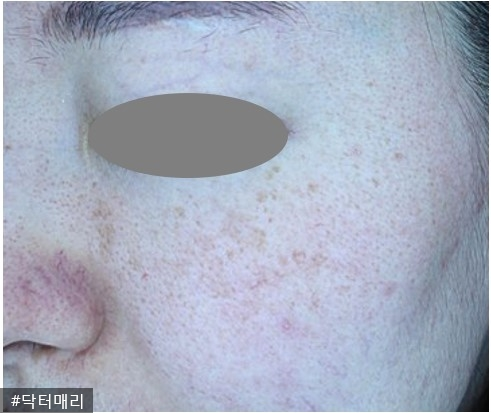
The bride-to-be also visited the clinic consistently for nearly two to three months.
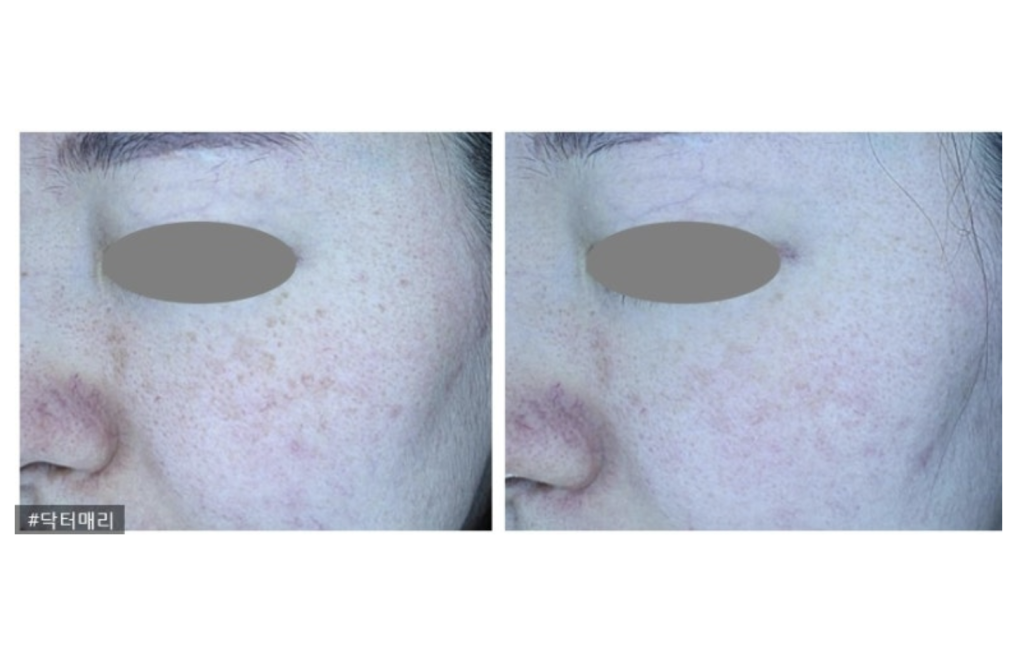
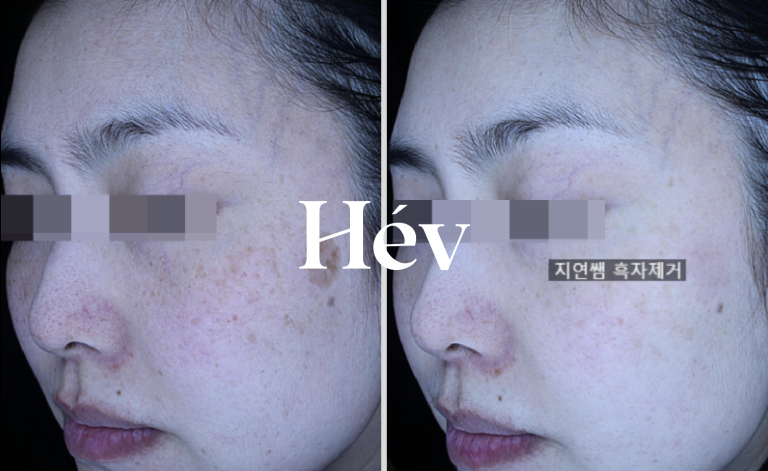
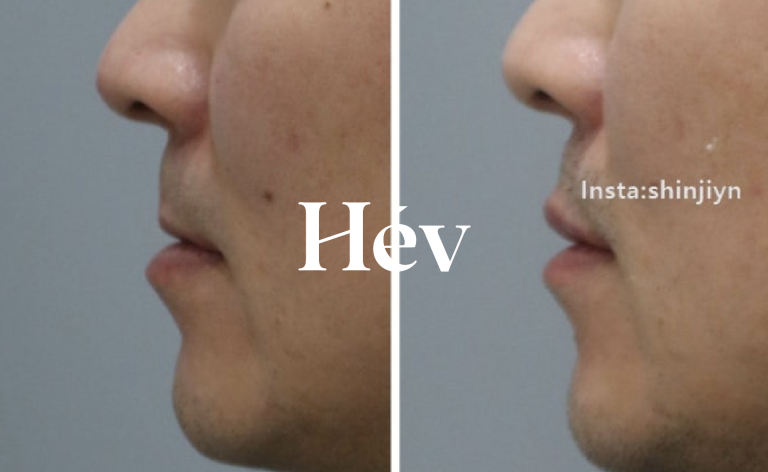
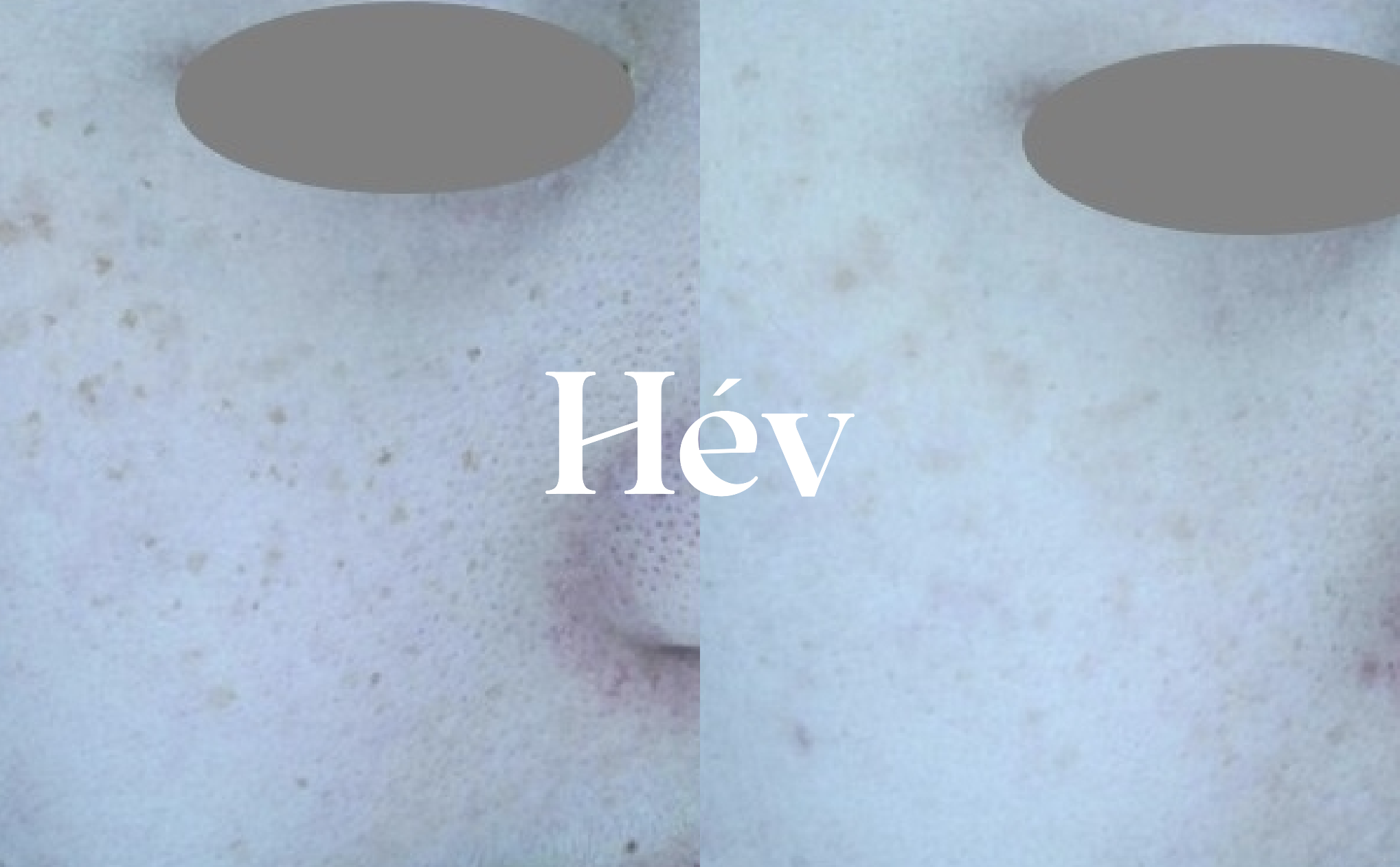
Before the procedure: 2024.06.04 – After the procedure: 2024.08.29
This photo was posted with consent and is an unedited, original photo of the same person taken in the same location.
The results of each procedure may vary, so please have a thorough consultation beforehand regarding possible side effects (such as pigmentation, bruising, or swelling).
As a result, it has now become possible to go out bare-faced without needing to cover blemishes with foundation or BB cream.
[Even in cases with more significant pigmentation]
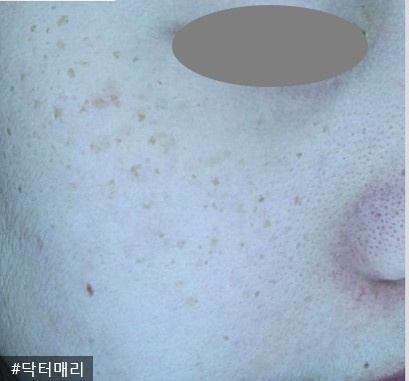
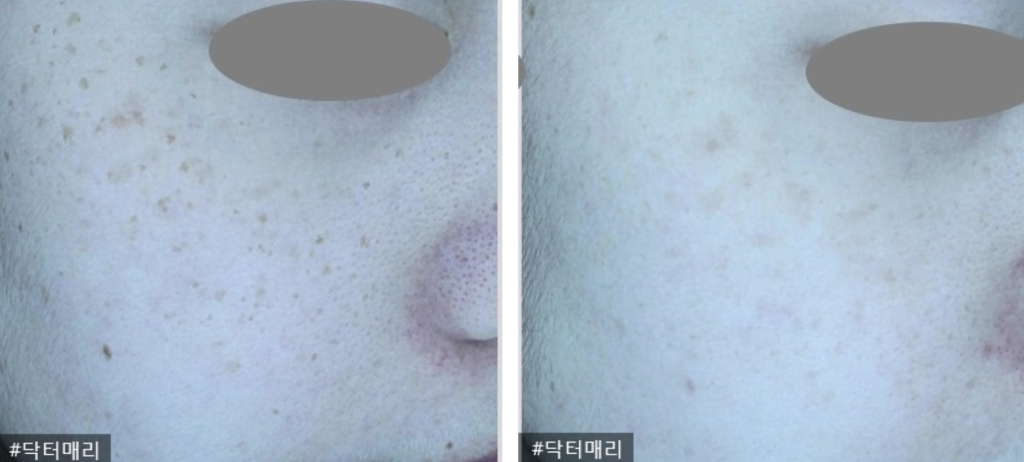
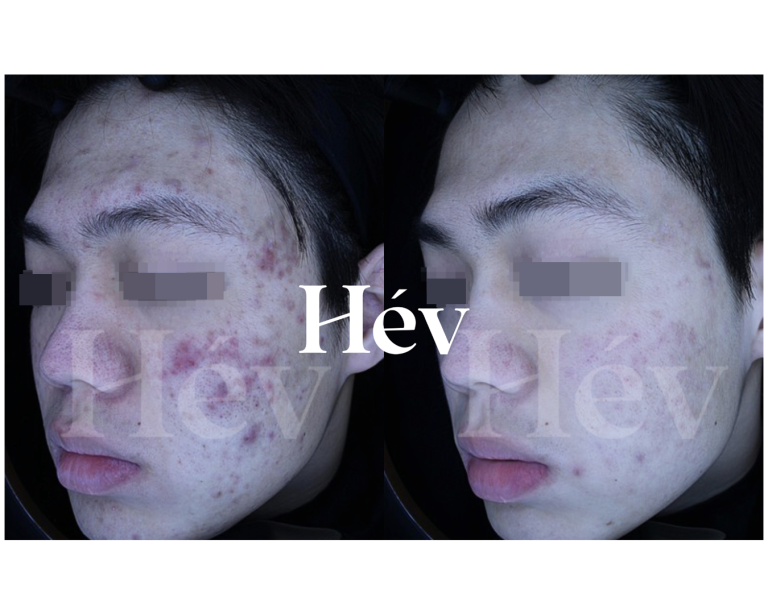
It takes a bit more time, but the pigmentation gradually fades and eventually disappears.
Treatment for pigment-related conditions such as freckles and nevi requires not only the right treatment approach and the experience of the practitioner, but also more patience and time than many people expect.
Thank you.