
Facial Sagging in Your 40s: Why the Temple Area Matters for a Natural-Looking Lift

Understanding Facial Sagging in Your 40s: Why the Temple Area Matters
Many patients visit our clinic with concerns such as:
- “My cheeks seem to be drooping.”
- “My nasolabial folds make me look older.”
- “My jawline is less defined than it used to be.”
It is natural to focus on the areas where sagging is most visible, such as the cheeks, lower face, and smile lines. However, facial aging is rarely caused by changes in just one isolated area.
For a natural-looking treatment plan, it is important to assess the face as an interconnected structure—including the skin, fat layers, muscles, facial fascia, ligaments, and underlying bone.
Why Treating Only the Cheeks May Not Be Enough
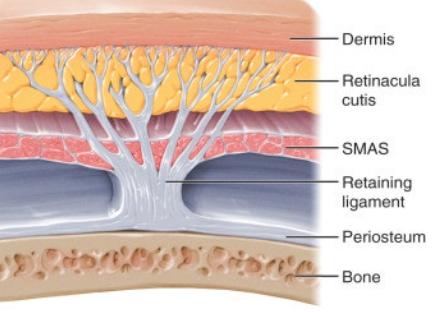
The face is supported by more than the skin alone. Beneath the skin is the SMAS (superficial musculoaponeurotic system), a fibrous layer associated with facial muscles and soft tissues. There are also retaining ligaments, which help anchor facial tissues to the underlying bone.
You can think of these ligaments as the stakes that hold a tent in place.

With age, changes in skin elasticity, fat distribution, connective tissue, and facial support structures can allow soft tissues to shift downward under gravity. This may contribute to:
- Midface or cheek descent
- A less defined jawline
- Deepening nasolabial folds
- Heaviness around the lower face
- A tired or less refreshed appearance
When treatment addresses only the visibly sagging area, it may not fully account for changes in the upper facial support structures. A comprehensive evaluation can help determine whether the cheeks themselves are the primary concern—or whether changes higher on the face are contributing to the overall appearance.
The Temple Area: An Often-Overlooked Part of Facial Support
The temple, also called the temporal area, is located at the side of the forehead, between the outer eyebrow and hairline.
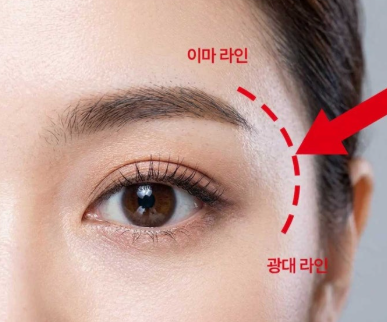
In many patients, age-related volume loss or soft-tissue changes in this area can affect the overall balance of the upper and midface. As support in the temporal region changes, the face may appear flatter, more hollow, or less lifted.
This does not mean that every patient with sagging cheeks requires temple-focused treatment. However, the temple area should be considered during a facial assessment, particularly for patients in their 40s and beyond who notice gradual changes in facial contour.
A careful evaluation may reveal that concerns such as cheek sagging, nasolabial folds, and jawline laxity are connected to broader changes in facial structure and tissue support.
Why a “Vector-Based” Approach Can Look More Natural
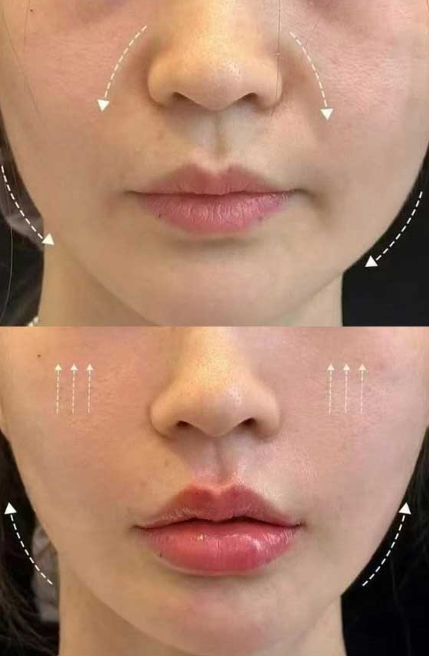
In aesthetic medicine, a successful lifting plan is not simply about pulling one area upward. It is about understanding the direction of tissue descent and selecting treatment approaches that support facial harmony.
Rather than focusing only on the nasolabial folds or lower cheeks, a dermatologist may evaluate the upper face and temple region to determine whether improving balance and support there could enhance the overall contour.
The goal is not to create an overcorrected or obviously treated appearance. Instead, the goal is to help patients achieve a refreshed, natural-looking result that complements their unique facial anatomy.
Depending on the individual, a customized plan may involve one or more approaches designed to address skin quality, volume changes, tissue laxity, or contour concerns.
When Should You Consider a Facial Sagging Assessment?
Facial aging progresses gradually, and early changes are often subtle. You may benefit from a consultation if you have noticed:
- Cheeks that appear lower or flatter than before
- Nasolabial folds that seem more pronounced
- Early jowl formation or a softer jawline
- A tired, heavy, or less defined facial appearance
- Hollowing or loss of volume in the temples
- Dissatisfaction with previous lifting treatments that did not address your overall facial balance
For medical tourists, an in-person assessment is especially important before undergoing treatment. Facial anatomy, skin thickness, bone structure, degree of laxity, and aesthetic preferences differ significantly from person to person.
Personalized Planning for International Patients
No single lifting treatment is right for everyone.
Some patients may benefit from prioritizing the temple and upper-face region. Others may need a treatment plan that includes the midface, jawline, skin quality, or several areas together. The appropriate approach depends on a direct examination and an understanding of the patient’s goals, medical history, and timeline for travel.
During a consultation, a board-certified dermatologist can assess:
- Facial bone structure and proportions
- Skin thickness and elasticity
- Volume loss and fat distribution
- The degree and location of tissue laxity
- The likely causes of visible sagging
- Whether a single treatment or combination approach is more appropriate
For overseas visitors, it is also important to discuss recovery time, follow-up needs, and realistic expectations before scheduling a procedure.
Frequently Asked Questions
Do sagging cheeks always require cheek lifting treatment?
Not always. Cheek sagging may be influenced by changes in the midface, temples, lower face, or overall facial support. A full-face evaluation can help identify which areas should be considered for the most balanced result.
When do temple-area changes usually become noticeable?
The timing varies widely. For many people, changes in facial volume, skin elasticity, and soft-tissue support become more noticeable during their 40s, although genetics, lifestyle, sun exposure, weight fluctuations, and skin characteristics can affect the process.
Are nasolabial folds related to the temple area?
They can be. Nasolabial folds may become more prominent due to multiple factors, including skin changes, volume loss, cheek descent, and changes in surrounding facial support. The temple region may be one part of a broader facial assessment, but it is not the only possible cause.
How can I determine the cause of my facial sagging?
The most reliable method is an in-person evaluation by a qualified dermatologist or aesthetic physician. A direct assessment allows the clinician to examine your facial structure, skin condition, and tissue laxity before recommending an individualized treatment plan.
Final Thoughts
Visible cheek sagging and deepening nasolabial folds may be signs of broader structural changes rather than isolated concerns. Looking beyond a single wrinkle or area can help create a more balanced and natural-looking approach to facial rejuvenation.
A personalized consultation is essential to determine whether the temple area, midface, lower face, or a combination of regions should be addressed.
Start your journey with a free online consultation!
Once you submit the form, our doctor will carefully review your information and get back to you with personalized treatment recommendations.


Hév Seoul branch
LOCATION
|
Monday – Friday |
10:00 AM – 8:00 PM |
|
Lunch Break |
1:00 PM – 2:00 PM |
|
Saturday (no lunch break) |
10:00 AM – 4:00 PM |
Note: This article was translated and published from the original with consent from the author.