Complete Guide to Radiesse for Marionette Lines
Radiesse Before & After (Real Photos) + What to Expect
Let’s start with the Radiesse before-and-after photos.
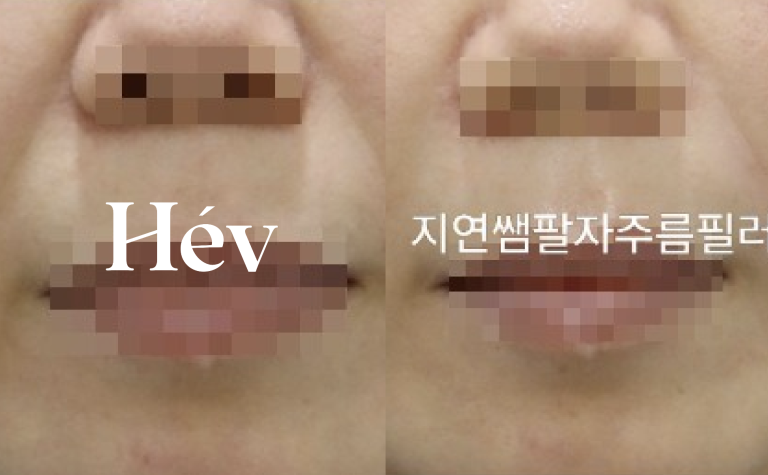
Before: April 3, 2023 | After: January 11, 2024
These images are shared with consent and are original, unedited photos of the same person, taken in the same location.
Results can vary by person. Before treatment, please make sure you have a thorough consultation about possible side effects such as pigmentation, bruising, swelling, and temporary tenderness.
If you’ve been curious about the German “wrinkle eraser,” Radiesse, this guide will walk you through where it works best, why it’s different from filler, and what kind of results you can realistically expect.
When Fillers (or Juvederm Voluma) Are a Great Choice
For areas where HA filler or Juvederm Voluma is appropriate, we customize the plan based on your goals and your facial structure.
Common concerns include:
- Sunken under-eyes caused by cheek volume loss
- Deepening nasolabial folds (smile lines)
- Hollowing in the side cheeks as “baby fat” fades
- Shadowed, peanut-shaped contours (loss of smooth mid-face fullness)
Both filler and Juvederm Voluma can be excellent options for improving these areas.
One area I’m cautious with: around the mouth
Even though I personally like (and use) fillers, there’s one area where I generally do not recommend traditional filler or Voluma: the area around the mouth.
Why? The skin here is thin and the muscles are constantly moving (talking, eating, smiling). If a product that “adds volume” sits in the wrong layer, marionette lines or frown-like shadows can look more pronounced—sometimes creating an unnatural result.
Because of that, many clinics (including ours) have traditionally relied on skin Botox or skin boosters to target fine lines around the lips.
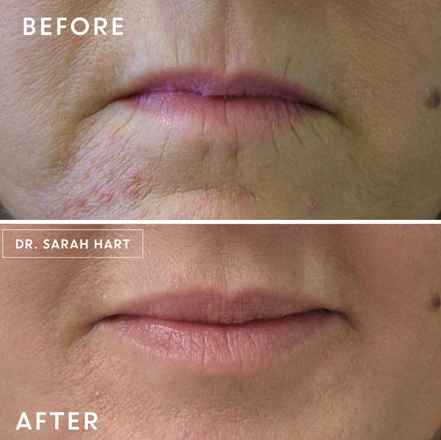
Before & after: Botox around the mouth
Botox for mouth wrinkles can be very effective. But it works by reducing muscle movement—it doesn’t fully solve lines that come from skin thinning and loss of dermal density.
And because there are so many small muscles around the mouth…
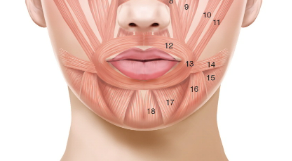
…too much Botox in this area can temporarily weaken movement and make speaking, eating, or drinking feel awkward.
For a long time, people simply tolerated that trade-off because there weren’t many good alternatives for fine perioral wrinkles.
That’s why I was genuinely excited when the product I’d been waiting for—Radiesse used as a skin booster—finally became available again with modern technique.
So, What Exactly Is Radiesse?
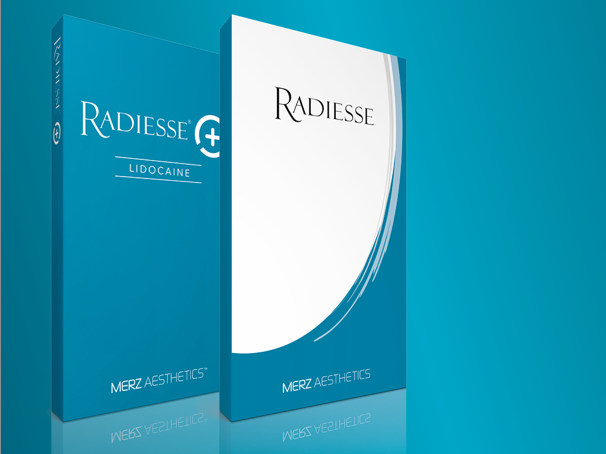
Radiesse is made by MERZ (Germany)—a company many people also recognize for Ultherapy and Xeomin.
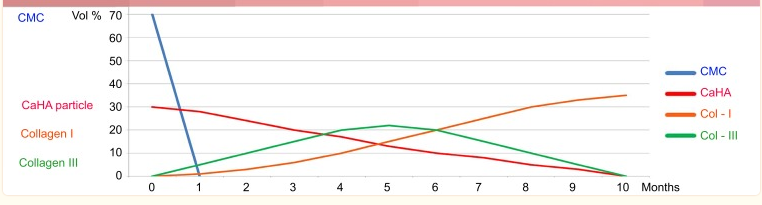
Its composition is:
- 30% CaHA (Calcium Hydroxylapatite)
- 70% CMC (Carboxymethylcellulose gel carrier)
Each box contains 1 syringe, and each syringe contains 1.5 cc.
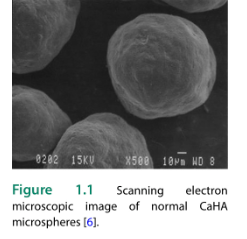
Radiesse particles are approximately 25–45 μm (up to ~50 μm). For reference, Juvederm is often cited around ~50 μm, and Juvederm Voluma around ~80 μm, so Radiesse is considered relatively fine.
Globally, Radiesse has been used extensively—reported usage has reached 150 million+ units.
It has been on the market for a long time, including FDA approval (2006) and CE certification in Europe.
A quick note on “calcium filler” concerns
To be transparent: Radiesse has had a complicated reputation in some places.
About 10–15 years ago in Korea, it was often used as a “calcium filler” in an undiluted form. In certain cases, that approach could lead to firm lumps that were difficult to resolve and sometimes required surgical removal. Understandably, that made many patients wary.
Meanwhile, in the U.S. and Europe, Radiesse continued to be used safely for years—with appropriate patient selection, proper technique, and increasingly, dilution protocols for skin-quality improvement.
We’ve seen a similar learning curve with other collagen stimulators (for example, Sculptra): as dilution and technique evolved over time, the risk of nodules decreased significantly.
The key takeaway: when hydration (dilution), storage, and technique are handled correctly—and when it’s chosen for the right indication—Radiesse can be a very compelling option, even for people who typically dislike the “filler look.”
Today’s Radiesse techniques focus on proper dilution and even distribution, which helps minimize lumpiness and supports a smoother, more natural result. The procedure has evolved dramatically over the past two decades.
Personally, I was thrilled to see Radiesse reintroduced and used widely as a skin booster / collagen-stimulating treatment.
Where Radiesse Is Commonly Used
Around the mouth
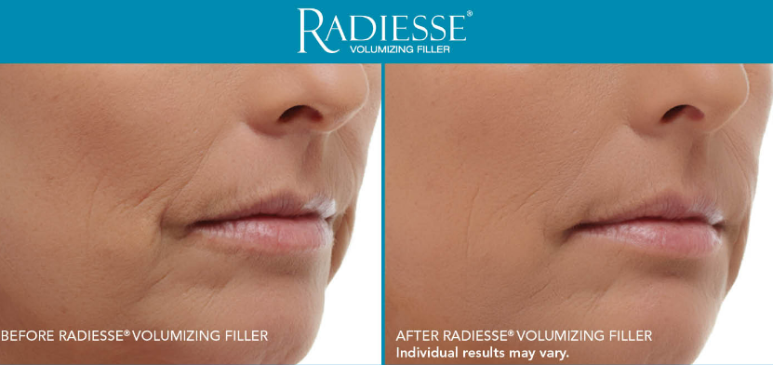
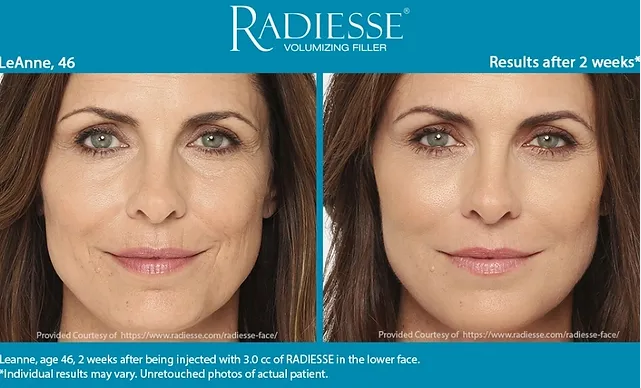
Back of the hand
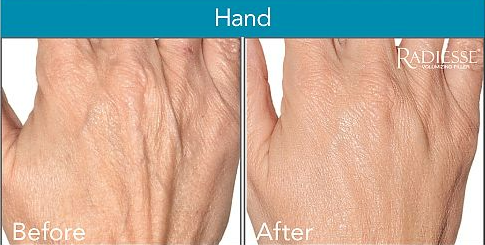
Radiesse is even approved for improving wrinkles on the back of the hands, which is one reason it’s so well-known in Europe for skin-smoothing effects.
In Europe, Radiesse is often described as a:
“wrinkle eraser”—meaning it helps soften the look of folds and fine creases in a smooth, natural way.
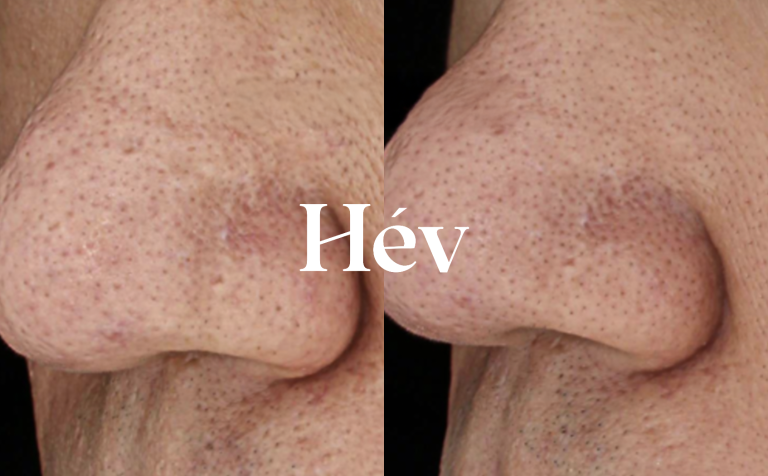
Here’s a published study image showing a wrinkled skin surface compared with skin after Radiesse treatment:
Wrinkled surface vs. surface after Radiesse treatment
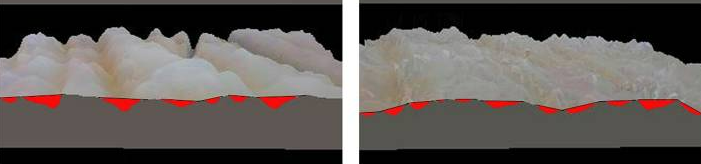
Clin Cosmet Investig Dermatol. 2019; 12: 771–784.
What’s interesting is that Radiesse doesn’t simply “inflate” fine wrinkles like some fillers can. Instead, it can improve the surface in a way that looks flatter, tighter, and smoother—more like the skin is being refined rather than lifted into a bump.
In practice, once Radiesse is available, I often use it for:
- Nasolabial folds (smile lines)
- Back-of-hand wrinkles
- Neck wrinkles
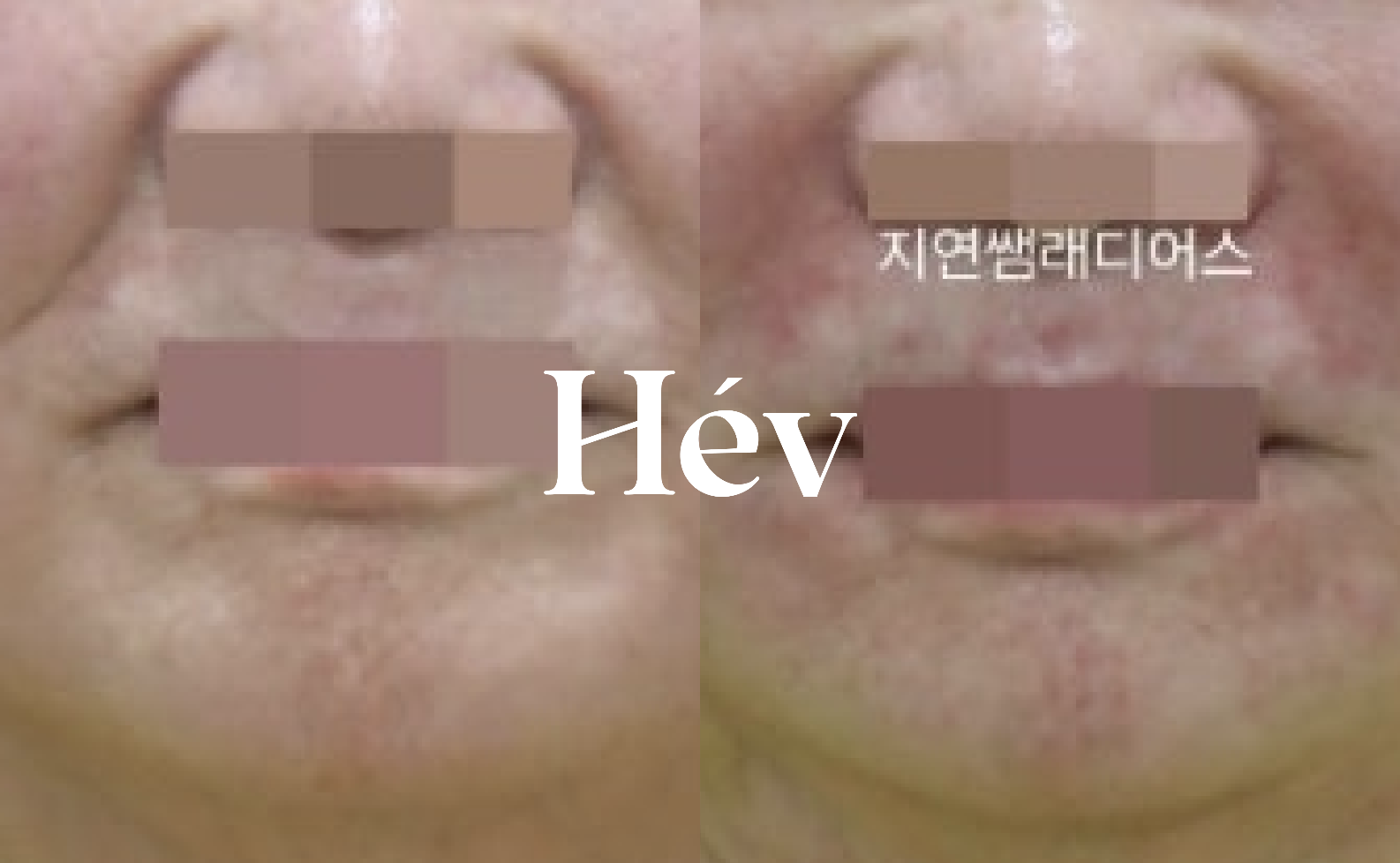
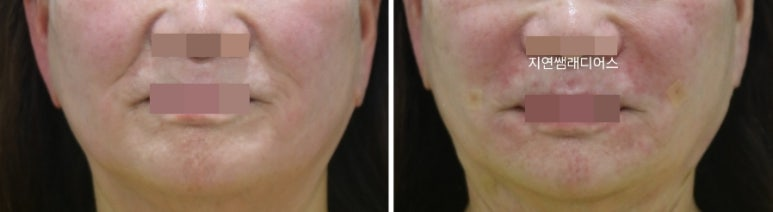
Radiesse Case Example (Immediate After)
Case 108
Radiesse: 2 syringes
Before vs. immediately after
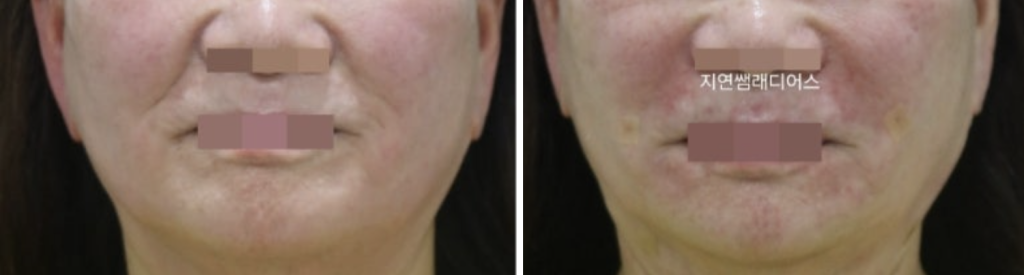
Immediately after the procedure
On this day, a skin booster treatment was also performed, so you can see some injection marks and redness on the cheeks and jaw area.
Even with typical immediate post-procedure signs like mild swelling, bruising, or needle marks, most people can return to daily life right away.
The ideal number of Radiesse sessions depends on the depth of the wrinkles, the treatment area, and the total amount used. In general, many patients do best with 2–3 sessions, spaced about 1–3 months apart.
Who Is Radiesse Best For?
In short, Radiesse is a great fit if you want wrinkle improvement that looks smooth and natural rather than “puffy.”
- Wrinkle-prone areas where a subtle, natural softening is ideal
- Nasolabial folds (smile lines), glabellar lines (frown lines), fine lines around the mouth, neck wrinkles, and back-of-hand wrinkles.
Or:
- If you want wrinkles to look flatter, smoother, and more “blended in” with the surrounding skin
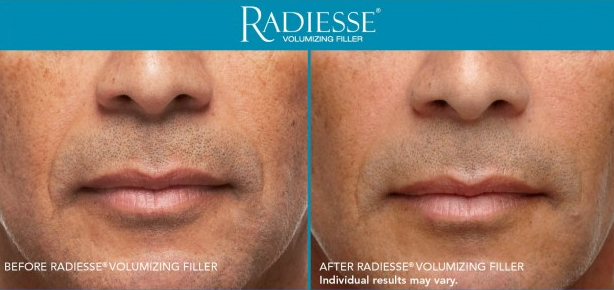
If that sounds like your goal, Radiesse may be an excellent option.
Filler vs. Juvederm Voluma vs. Radiesse (Which One Should You Choose?)
Filler, Juvederm Voluma, and now Radiesse—it’s normal to wonder which one is “best,” especially for nasolabial folds (smile lines).
Previously, there were two main choices for smile lines: standard HA filler and Juvederm Voluma. Now, Radiesse adds a third option—especially when your priority is skin texture and smoothness rather than just adding volume.
The truth is, all three have clear strengths. The best results usually come from:
- Choosing the right product for the right layer and right indication
- Using them strategically (sometimes in combination)
- Getting assessed at a clinic with deep experience in all three
Fillers and Voluma can deliver great outcomes—but they require careful technique and planning. And in my experience, Radiesse has the potential to become a real “dark horse” for smoothing wrinkle lines in a natural-looking way.
Thank you for reading.
Similar Posts
Review: Juvelook Volume for Smile Lines & Laser Treatment for Freckles
Welcome to HEV Dermatology There are moments in the consultation…
Filler and Botox for Glabella and Forehead Wrinkles at Hev Clinic
Case 104: Forehead + Glabella Botox with Forehead Contour Correction…
Belotero Filler and Botox for Neck Wrinkles – 1-Year Follow-up Treatment in Korea
Before: February 7, 2024 | After: February 27, 2024 These…
Seborrheic Keratosis Removal Laser Treatment at Hev Clinic
This post shares real results from a seborrheic keratosis removal…
Filler for Smile Lines (2cc) Before & After at Hev Clinic, Korea
Today, I’m sharing a before-and-after look at nasolabial fold correction…
Treating Nose and Temple Scarring (Acne, Hypertropy, Fingernails) with Juvelook + Curejet at Hev Clinic
CureJet + Juvéderm Voluma (scar treatment case review) Before: 2023.02.20…