Reviewing Laser Treatments: Thermage FLX and Oligio, and Their Effects
This post was written in accordance with the Medical Service Act and was created by a medical institution operated by a board-certified dermatologist at Hev Clinic, with the consent of the patient who received treatment.
It is not intended to emphasize treatment effects or personal treatment experiences, but rather to provide general information about dermatology and aesthetic procedures.
The photos used in this post meet the following conditions:
- The same individual appears in both the before and after photos.
- The dates when the photos were taken before and after treatment are specified.
- The photos were taken under the same conditions.
This post provides various medical information, including possible side effects that may occur from the procedure. In accordance with Article 56, Paragraph 2, Subparagraph 7 of the Medical Service Act, diagnoses and treatment results may vary depending on the individual, and both effects and side effects may differ from person to person.
※ This article was written directly by the director of Hev Clinic for the purpose of providing information about dermatologic and aesthetic procedures.
Anti-aging & Lifting
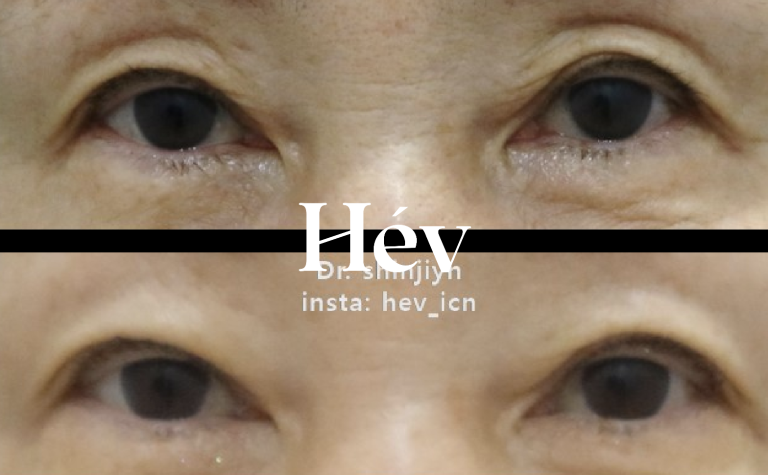
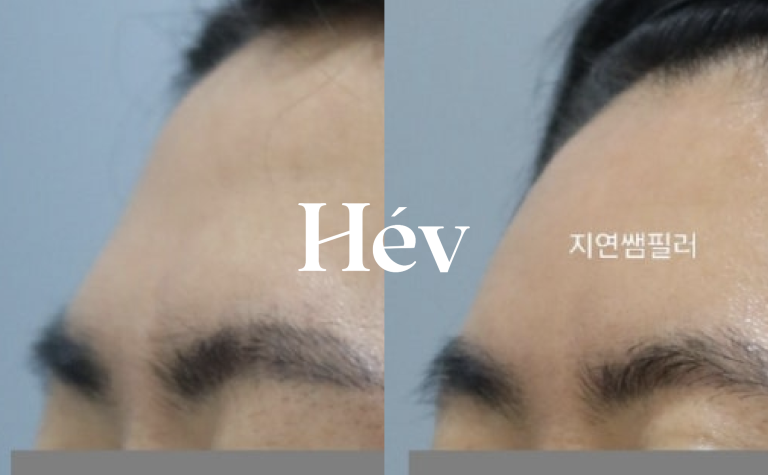
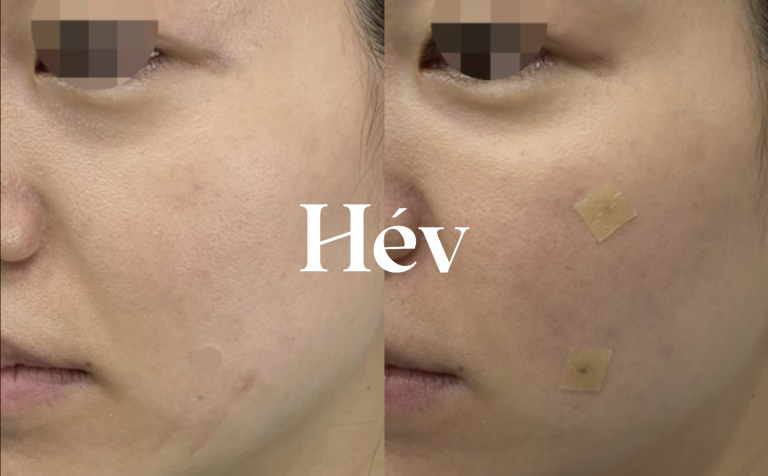
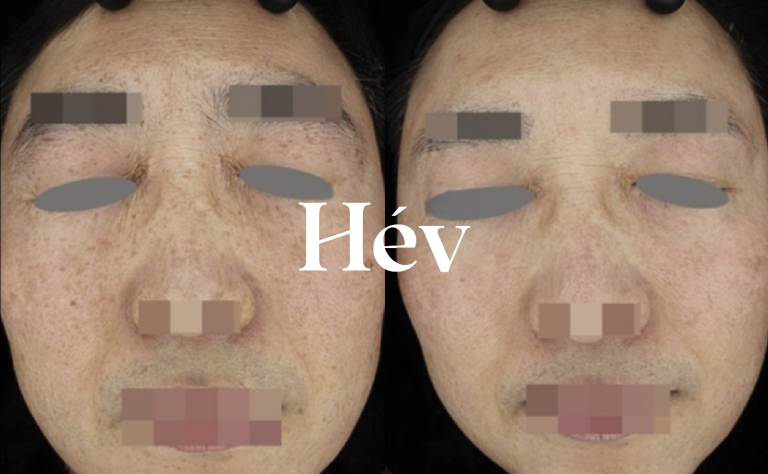
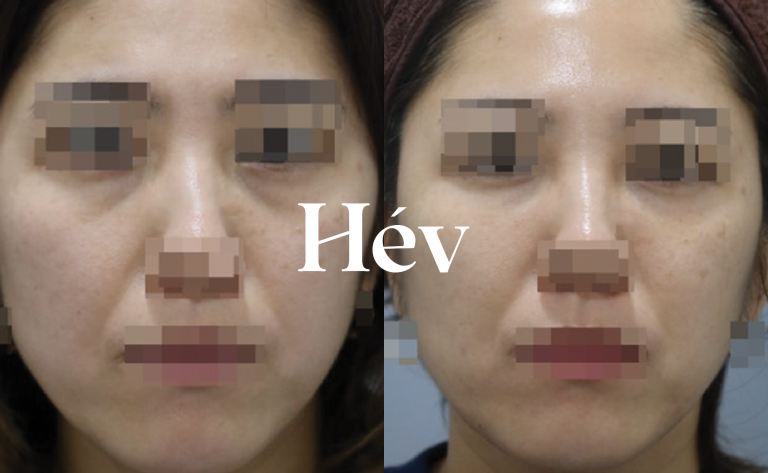
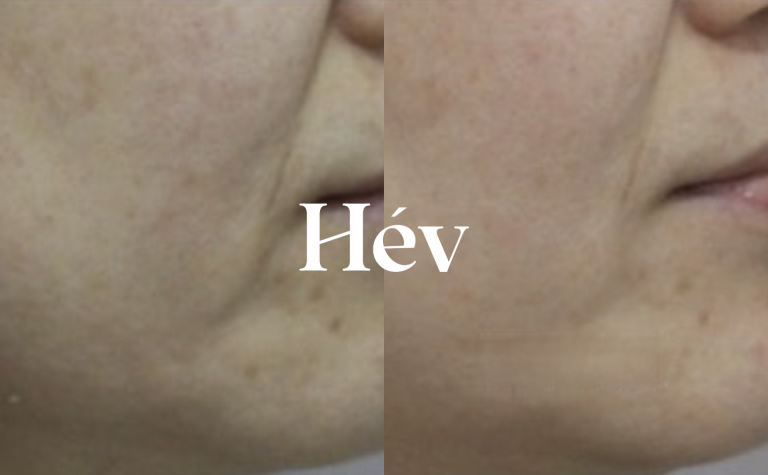
Before: 2024.03.23 | After: 2024.04.27
This photo was shared with consent. It’s an original, unedited image of the same person, taken in the same location under similar conditions.
Results vary by individual. Please make sure to consult thoroughly in advance about potential side effects such as pigmentation, bruising, or swelling.
If you’re interested in getting lifting treatments regularly but feel stuck on which procedure to choose—or which one is “better”—you’re not alone. It can be confusing, even after reading a lot of reviews, because each device improves the skin in a slightly different way.
In my experience, the most helpful approach is a combination of clear explanations, simple analogies, and side-by-side photo comparisons.
In this post, I’ll walk you through what to realistically expect from radiofrequency (RF) lifting treatments—especially if you’re considering Thermage or Oligio.
RF devices are usually grouped into monopolar vs. bipolar systems. Today, we’ll focus on monopolar RF.
If you’ve searched for lifting lasers before, you’ve almost certainly heard of Thermage. And you may have seen Oligio, which is well-known in Korea and increasingly discussed by treatment enthusiasts.
Right now, Thermage and Oligio are two of the most talked-about monopolar RF lifting treatments, so I’ll keep the spotlight on those.
Thermage is an imported device, while Oligio is often described as Korea’s “Thermage-like” option.
Because they operate on the same core monopolar RF principle, I’ll explain the mechanism once—and then we’ll apply it to both.
Thermage: What It Is and What It Can (and Can’t) Do
Let’s start with Thermage.
Here’s a screenshot from the official website:

Thermage is made by a company called Solta.
It’s often introduced as a non-invasive treatment that helps improve skin firmness—without surgery.
Over time, Thermage has built a reputation as one of the most recognizable “premium” options in the lifting category.
And the concept really was a big deal: improving skin tightness and firmness by stimulating collagen—without needles, threads, incisions, stitches, or the kind of skin surface damage you might associate with some resurfacing lasers.
Thermage highlights the following key benefits:
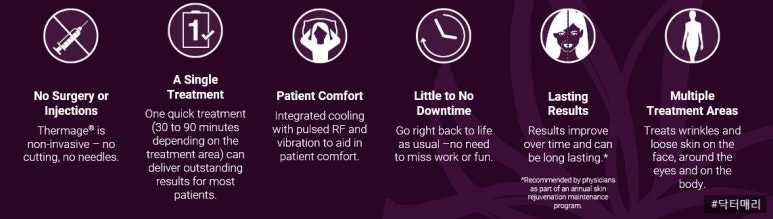
- Non-invasive – no cutting, stitches, needles, surgery, or injections
- Typically one session (often about once a year)
- Built-in cooling for improved comfort
- Minimal downtime – return to normal routines quickly
- Results can last months to a year (and sometimes longer depending on skin and lifestyle)
- Can be used on the face and body
No downtime and “once-a-year” maintenance definitely sounds appealing. So the real questions are: How does it work? And how much change can you realistically expect?
Below are example images provided by Thermage (you can find more on the official site):
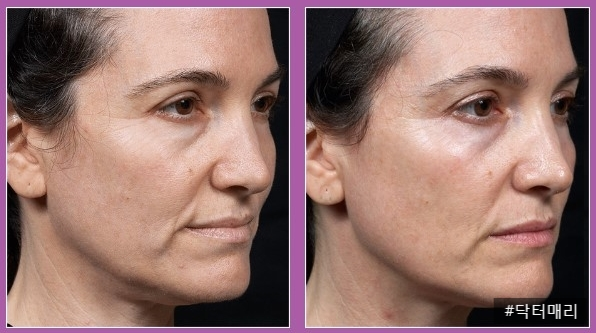
You may notice that the wrinkles don’t “vanish,” but fine lines around the mouth and cheek area look softer, and the skin appears more elastic and firm overall.
Even Solta tends to describe the effect as smoother-looking lines and improved contours (often referred to as smooth contouring).
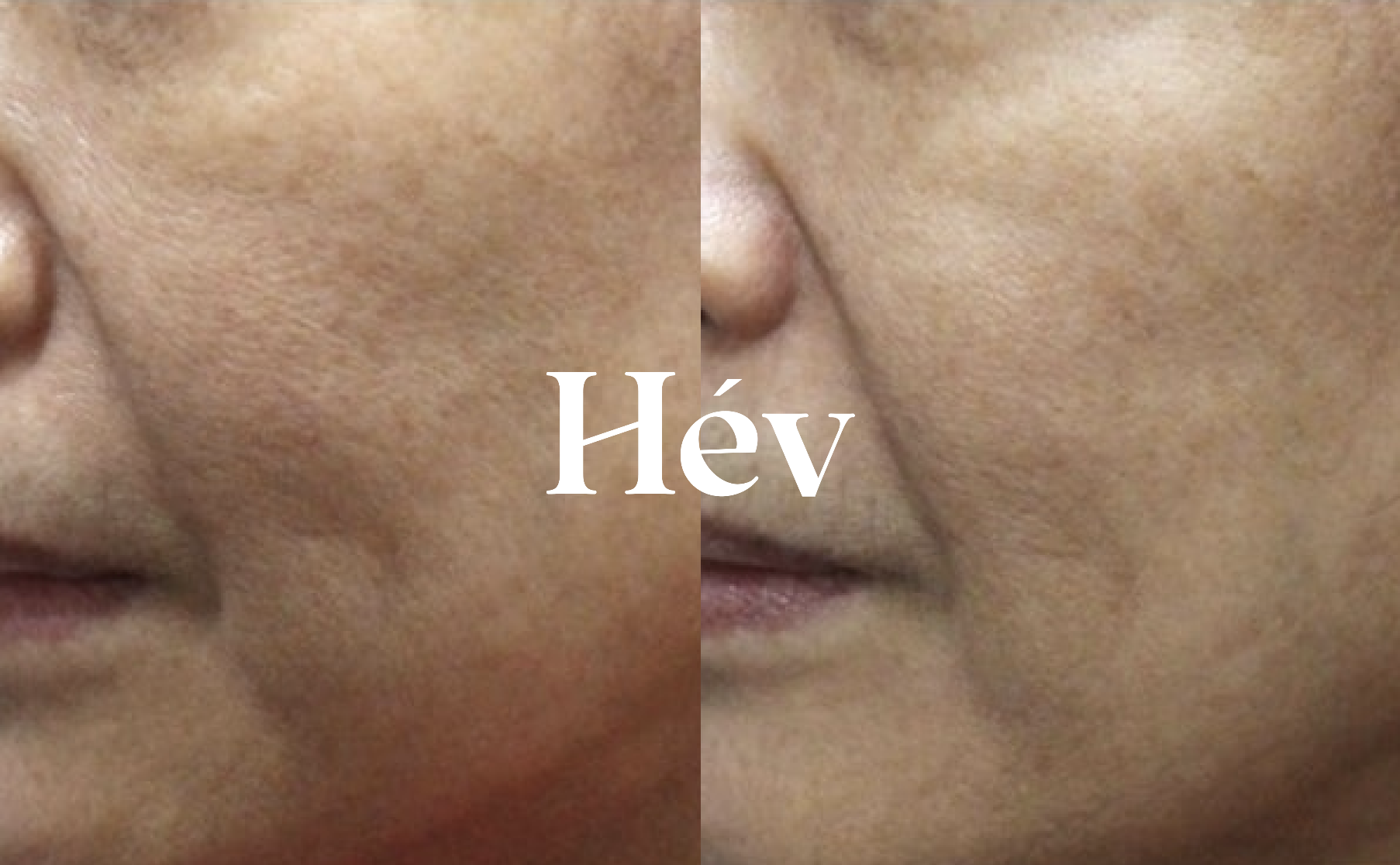
There’s another photo that, in my opinion, makes the core effect of monopolar RF even easier to understand.
It’s this one:
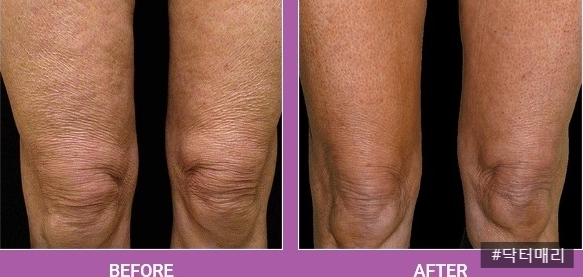
When skin looks dry, thin, rough, and covered in fine lines, monopolar RF can help it look more hydrated, thicker, smoother, and firmer by strengthening the underlying collagen structure.
Why Some People Feel Thermage/Oligio “Didn’t Do Much”
The skin often does improve—fine lines soften and overall firmness increases. But I’ve said before (especially about Oligio):
“If you’re expecting a dramatic, obvious change, Oligio may not feel satisfying.”
Why?
[1] Many lifting beginners don’t have “paper-thin” skin yet.
Most people who start considering lifting in their 30s and 40s (and even some in their 20s) don’t have extremely thin, fragile skin.
That means you might not get an immediate “wow” moment like, “My face looks completely different,” or “My skin suddenly feels unbelievably tight.”
Monopolar RF is often more about slowing down thinning and laxity—reinforcing the skin gradually, layer by layer. Because the change is subtle and progressive (not instant and dramatic), it can be unfairly labeled as a treatment that “doesn’t work.”
That’s a bit of a shame, because the goal is often anti-aging maintenance, not a one-day transformation.
[2] Nasolabial folds are often misunderstood.
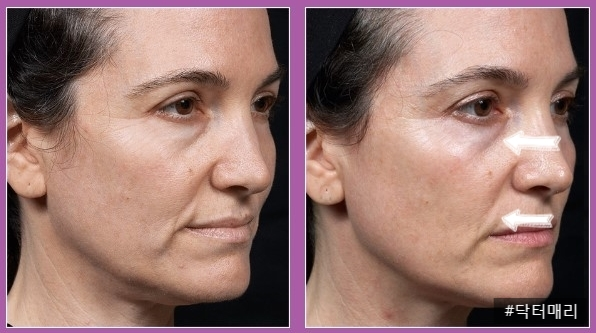
Because people casually call many facial lines “wrinkles,” it’s common to assume that nasolabial folds can be erased with a laser.
But nasolabial folds are normal anatomical features—they’re part of how the face is naturally structured. Even babies have them. If the face were a door, they’re like the hinges: functional and necessary.
That’s also why, in English, we say nasolabial folds—folds, not wrinkles.
So if the folds have become deeper due to volume loss, a certain amount of volumizing treatment (such as filler or collagen stimulators like Sculptra) is often needed for more obvious correction.
Sometimes what happens is:
- Someone with relatively healthy (not super thin) skin gets a non-invasive RF lifting treatment, and
- They expect deep folds (like nasolabial folds) to completely disappear.
When expectations don’t match what the procedure is designed to do, Thermage and Oligio can feel underwhelming. The skin can genuinely become firmer, but if your main goal is dramatic fold removal, the satisfaction may be lower.
That’s why it’s most accurate to think of Thermage and Oligio as anti-aging maintenance treatments—chosen to slow visible aging and help skin stay resilient.
Even when the changes are subtle, the treatment can still be working under the surface.
How Monopolar RF (Thermage/Oligio) Works
Here’s the basic mechanism behind Thermage and Oligio:
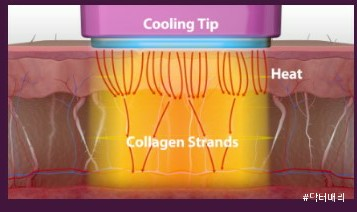
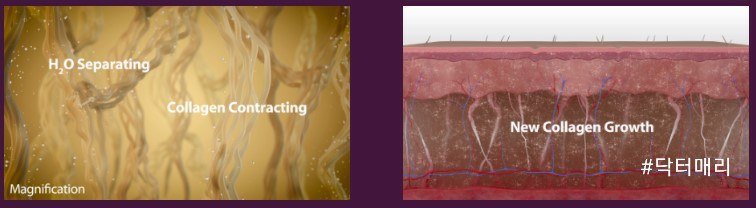
When monopolar RF energy is delivered into the skin, it heats the deeper collagen structures. This heat causes existing collagen fibers to contract and also triggers the body to produce new collagen over time.
The end result is a collagen framework that becomes denser, stronger, and more supportive—which can translate into smoother texture and improved firmness.
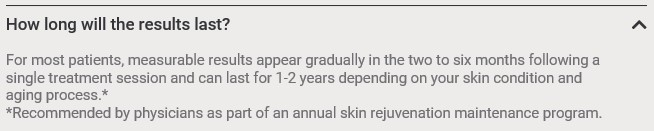
How long do results last?
Collagen remodeling typically continues for about 2–6 months after treatment. Depending on your skin type, lifestyle, and aging rate, results may last around 1–2 years.
What About Oligio?
Oligio is a Korean-made monopolar RF device that uses the same overall concept and mechanism as Thermage. So the “why it works” is essentially the same as what we covered above.
So what results can you expect with Oligio?
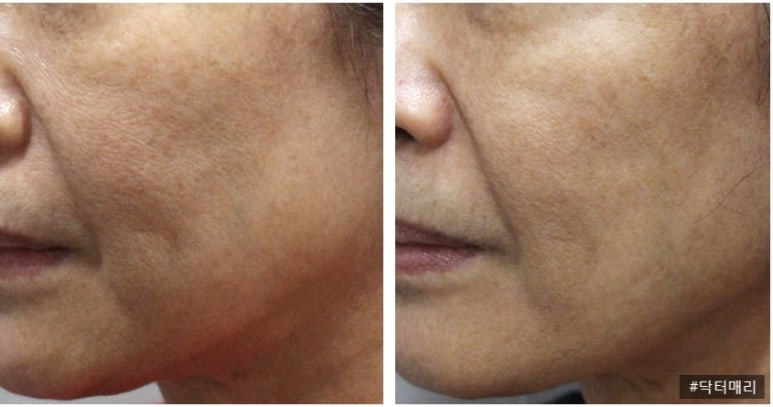
Areas like the cheeks and jawline—where skin can be thinner and fine lines tend to show—often look firmer and more elastic after treatment.
Overall, the response is similar to Thermage: improved texture, better bounce, and a subtle tightening effect that becomes more noticeable over time.
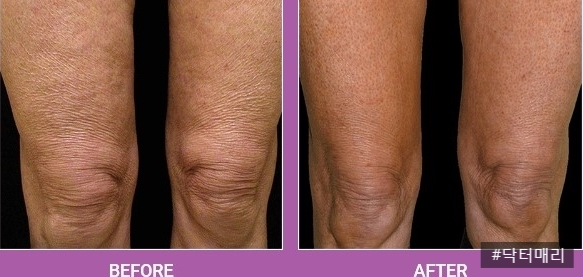
I hope these Thermage vs. Oligio photos make the results feel more “real,” and help you choose the treatment that best matches your goals—whether you’re aiming for prevention, maintenance, or a more intensive correction plan.
Thank you for reading.