Non-Surgical Facial Contouring in Korea – Treating Sunken Undereyes and Cheek Hollowing
Hello,
Welcome to Hev Dermatology Clinic.
This post was written in accordance with the Medical Service Act and was created by a medical institution operated by a board-certified dermatologist at Hev Clinic, with the consent of the patient who received treatment.
It is not intended to emphasize treatment effects or personal treatment experiences, but rather to provide general information about dermatology and aesthetic procedures.
The photos used in this post meet the following conditions:
- The same individual appears in both the before and after photos.
- The dates when the photos were taken before and after treatment are specified.
- The photos were taken under the same conditions.
This post provides various medical information, including possible side effects that may occur from the procedure. In accordance with Article 56, Paragraph 2, Subparagraph 7 of the Medical Service Act, diagnoses and treatment results may vary depending on the individual, and both effects and side effects may differ from person to person.
※ This article was written directly by the director of Hev Clinic for the purpose of providing information about dermatologic and aesthetic procedures.
Noticing Facial Sagging Lately? Here’s Why It Happens
Have you looked in the mirror recently and thought, “Why does my face look like it’s starting to droop?” You’re not imagining it—facial sagging is one of the most common (and frustrating) changes that happens with age.
So why does the face gradually sag over time?
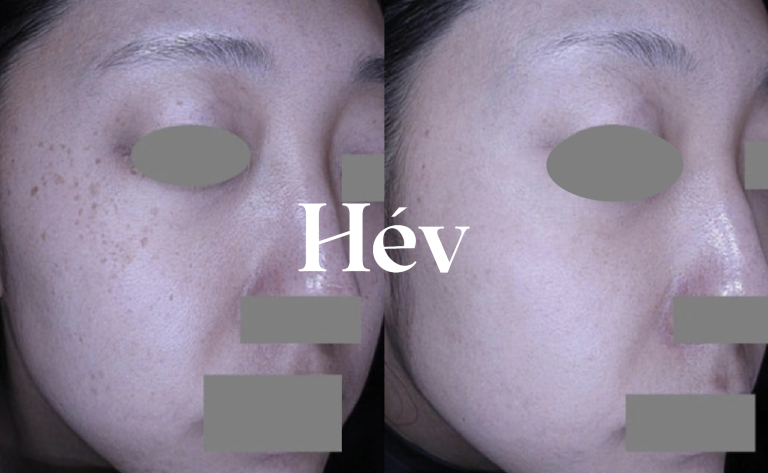
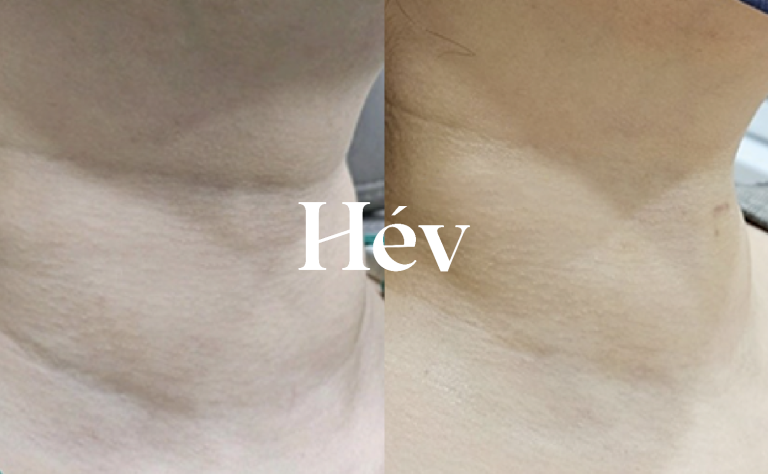
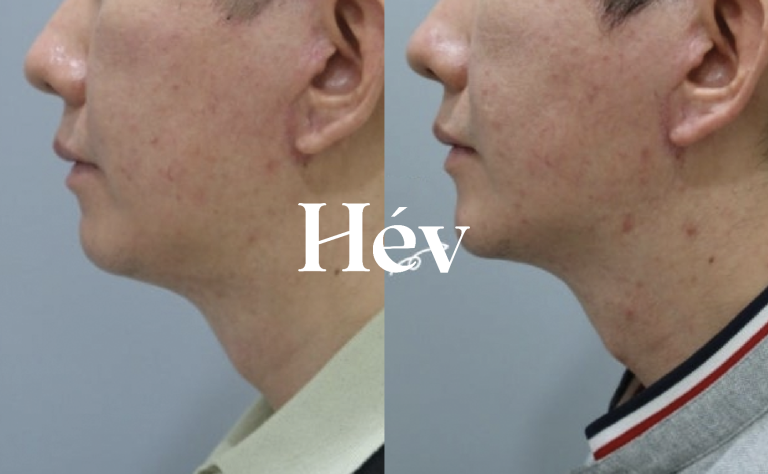
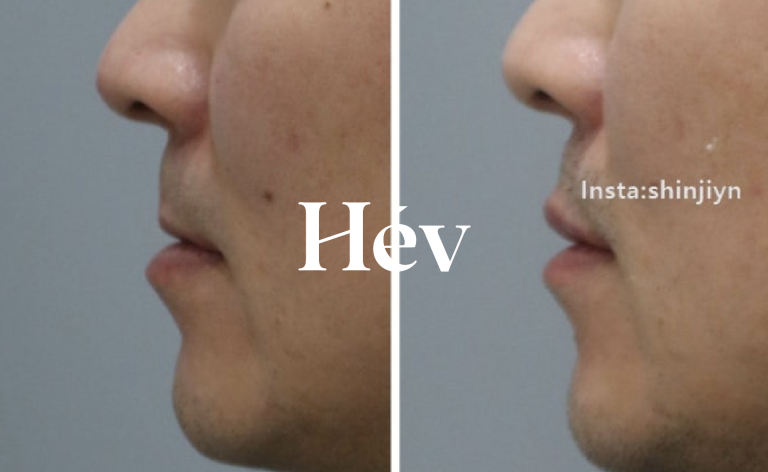
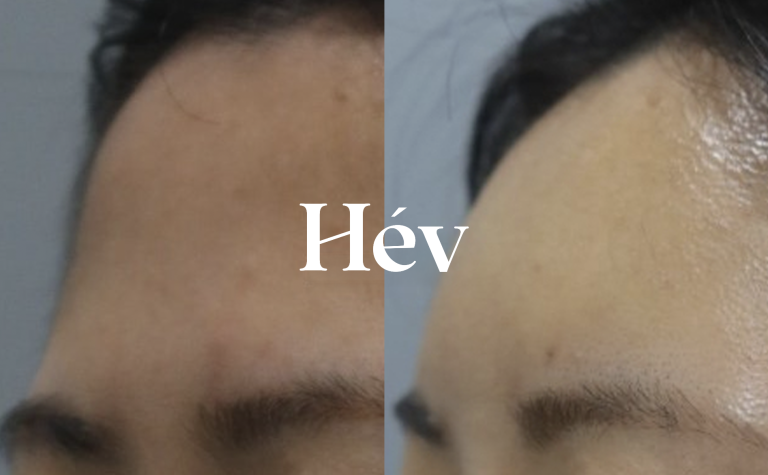
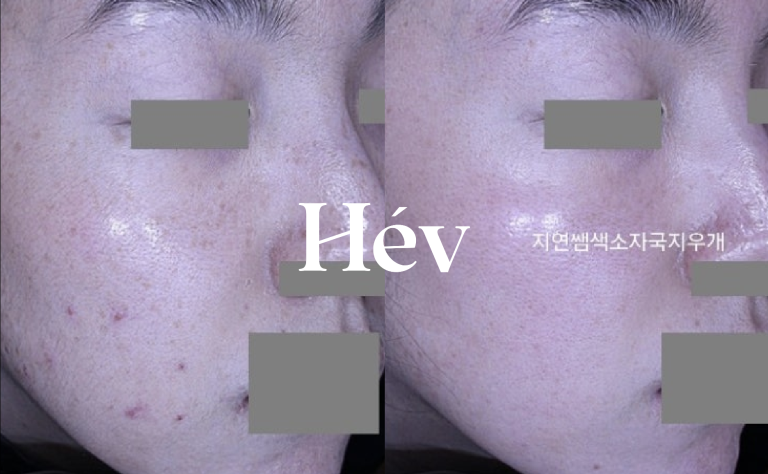
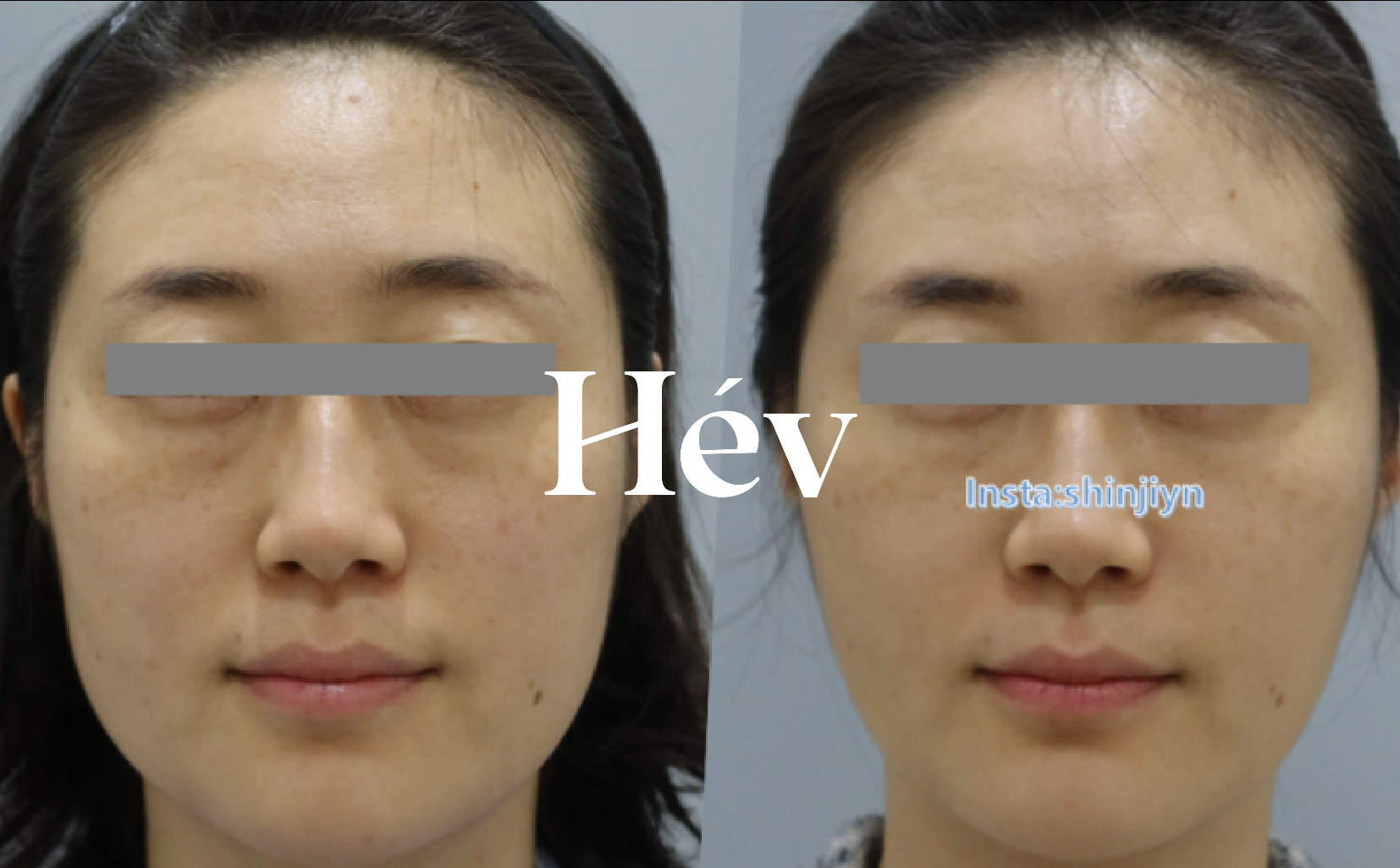
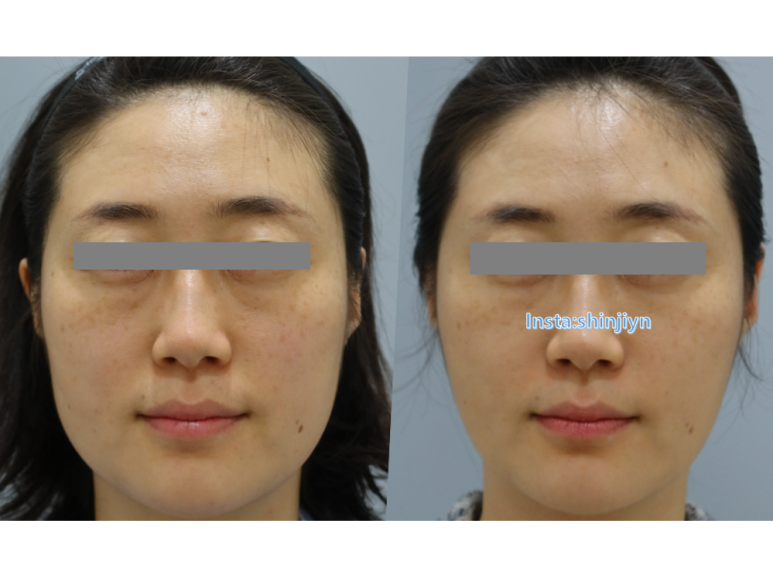
Before procedure: June 8, 2024 – After procedure: August 24, 2024
These photos are shared with consent and show the same person, photographed in the same location, with no edits.
Results vary by individual. A thorough consultation is essential, including a discussion of possible side effects such as pigmentation, bruising, or swelling.
In simple terms… yes, the face really does sag.
As we age, facial volume gradually decreases and the skin becomes thinner. The remaining soft tissue then shifts downward with gravity, which makes the face look heavier and less defined.
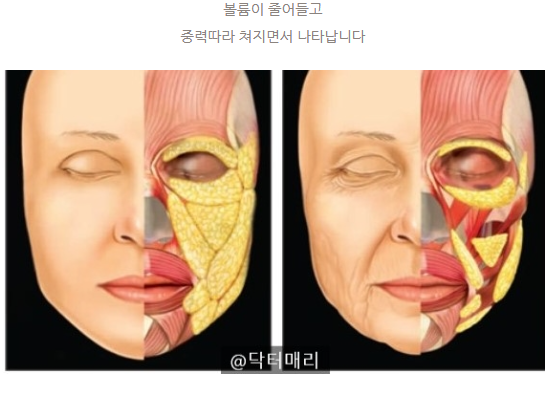
So what does that look like in real life?
Exactly—volume and tissue naturally move downward.
How Do We Improve a Sagging Face—Without Surgery?
So, what can you do when your face starts sagging like this?
Within just one year of opening, our clinic became the region’s leader in Juvéderm usage and before-and-after reviews. And after only one and a half years, we were selected as an Incheon TOP 5 / Nationwide TOP 100 Juvéderm clinic.
When people hear “filler,” they often think of lips or cheeks. But one of my favorite uses for Juvéderm is treating areas where fat loss creates a sunken, tired look, such as:
- Nasolabial folds
- Front cheek hollowing (under-eye hollows)
- Side cheek hollowing
- Temporal hollowing
Patient Case (Female, Early 40s)
- Front cheek hollowing
- Side cheek hollowing
- Peanut-shaped facial contour
She told me:
“Doctor, my face is sagging so much. I don’t look like myself anymore, and I always look tired.”
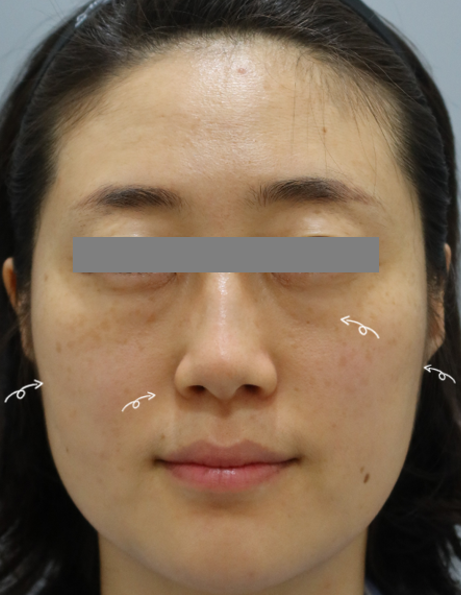
When the front cheeks lose volume, the under-eye area can look more prominent (including the “Indian band” line), and the nasolabial folds often appear deeper. When side cheek hollowing combines with lower-face sagging, the outline can start to look like a peanut shape.
That’s why many patients come in saying, “My face feels like it’s sagging a lot.” In most cases, it’s not just “skin laxity”—it’s also volume loss.
And no matter how advanced (or expensive) a laser is, a laser cannot replace missing volume.
“Can’t We Just Lift It?” Not Always.
A common question is: “Can’t we just lift the sagging area with lasers or a thread lift?”
Here’s the honest answer: when soft tissue has already lost elasticity and volume, pulling alone won’t rebuild what has hollowed out.
To improve the overall shape, the sagging tissue usually needs to be supported, restored, and firmed—not just “pulled upward.”
Those shadowy, hollow areas can be gently supported with Juvéderm Voluma, helping the face look smoother and more refreshed.
With time (often over the next few months), many patients see their face return to a more balanced, softly contoured shape.
Our Approach: Non-Surgical Contouring (Voluma + Ulthera Thermage)
At our clinic, we often combine Juvéderm Voluma + Ulthera Thermage for non-surgical facial contouring. Here are a few reasons patients love this approach:
- Minimal downtime – most people return to normal daily life the very next day.
We’re located near the airport, so we see many flight attendants. They typically prefer a clean, natural look and strongly avoid anything that seems “overdone.” Because of that, we’ve performed a lot of Juvéderm Voluma treatments for subtle, polished results.
I’m honestly looking forward to the day I board a flight and meet a flight attendant I treated with Voluma.
The best compliment we hear is: “I look rested—people can’t tell what I did.”
Honest Downsides (Because They Matter)
To be transparent, there are a few real drawbacks:
- Precise facial design is essential.
- Results are highly dependent on the practitioner’s skill—this isn’t something to trust to just anyone.
Why We Brought Ulthera Thermage In-House
Ulthera Thermage wasn’t originally available at our clinic. I chose to invest significantly to bring it in—and here’s why:
- The synergy of Ulthera Thermage + Juvéderm Voluma can be excellent.
- However, because Thermage can tighten so effectively, it may sometimes make the cheeks look more hollow if volume is already lacking.
To be fair, some patients actually like that “slimmer” look.
But if you’re coming to us for Juvéderm Voluma, it often means your cheeks already lack volume and the hollow areas are noticeable.
So if we carefully restore volume with Voluma, but then you receive Ulthera Thermage elsewhere afterward, a few months later you may feel like the volume you worked for has faded faster than expected.

Don’t worry—my eyes are full of passionate, happy energy.
I once saw a patient come in after the volume we had built—painstakingly, truly painstakingly—had largely disappeared after a different tightening treatment. That was the moment I thought, “We need a better system,” and I made the decision to bring the right equipment into our clinic.
Thankfully, some patients have shared their before-and-after experiences with the hope that others can avoid the same situation.
And yes… the cost.
Because it’s a premium combination treatment, the price can be a real barrier for some people.
Still, if your goal is to avoid surgical lifting, threads, or heavy-looking filler, and you want natural results with minimal downtime, this combination is one of the strongest options available today.
Thank you.